Choosing an air purifier can be confusing, especially when you encounter terms such as True HEPA, activated carbon, HEPA-type, and combination filtration. Although these filters may appear in the same air purifier, they do not perform the same job.
A HEPA filter is designed to capture airborne particles such as dust, pollen, pet dander, and many smoke particles. An activated carbon filter, on the other hand, is designed to adsorb certain gases, odors, and volatile organic compounds (VOCs).
Understanding the difference matters because the right filter depends on what you want to remove from your indoor air.
In this guide, we explain how HEPA and activated carbon filters work, what each one can and cannot remove, and when choosing an air purifier with both filtration technologies makes sense.
What Is a HEPA Filter?
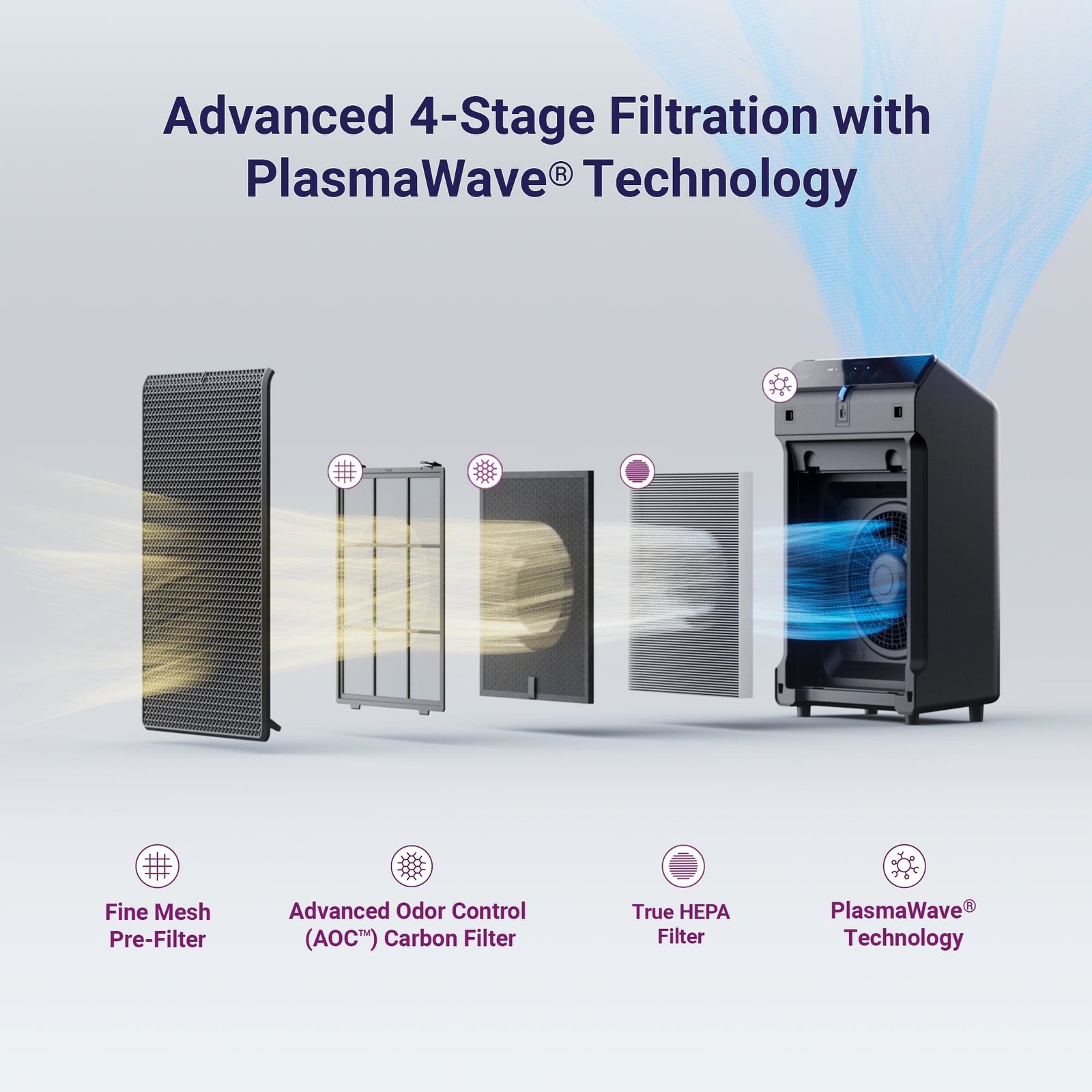
HEPA stands for High-Efficiency Particulate Air. It refers to a type of mechanical air filter designed to capture very small airborne particles as air passes through its filter media.
According to the U.S. Environmental Protection Agency (EPA), a true HEPA filter can theoretically remove at least 99.97% of airborne particles measuring 0.3 microns in diameter under the specified test conditions.
This measurement is important because particles around 0.3 microns are particularly difficult for mechanical filters to capture. Larger and smaller particles can also be captured efficiently.
How Does a HEPA Filter Work?
A HEPA filter typically contains a dense arrangement of fine fibers. As air moves through this material, particles are captured through several physical mechanisms, including interception, impaction, and diffusion.
The filter does not simply act like a screen with fixed-size holes. Different particles interact with the fibers in different ways, allowing the filter to capture particles both larger and smaller than 0.3 microns.
What Does a HEPA Filter Remove?
A properly designed HEPA air purifier can help reduce many airborne particles, including:
- Household dust and fine particulate matter
- Pollen
- Pet dander
- Mold spores
- Certain airborne allergens
- Many particles released by smoke
- Other suspended particulate matter
For households concerned about dust, pollen, pets, or wildfire smoke particles, HEPA filtration is an important feature to consider.
However, a HEPA filter does not automatically remove every indoor air pollutant.
What Does a HEPA Filter Not Remove?
A standard HEPA filter is designed for particles, not gases.
It is not intended to remove:
- Most household odors
- Cooking smells in gas form
- Many volatile organic compounds (VOCs)
- Gaseous chemical pollutants
- Carbon monoxide
This distinction is essential. A purifier with a HEPA filter may reduce smoke particles without effectively removing the gases and odors associated with smoke.
If gas and odor reduction is also a priority, look for an air purifier with an appropriate gas-phase filtration stage, such as activated carbon.
What Is an Activated Carbon Filter?
An activated carbon filter is an air-cleaning component designed to adsorb certain gases and odor-causing compounds.
Activated carbon is processed to create a highly porous structure with a large internal surface area. This structure provides many sites where certain gas molecules can attach to the carbon surface.
The process is called adsorption, not absorption.
- Adsorption occurs when molecules collect on a material’s surface.
- Absorption occurs when a substance enters and spreads through another material.
Activated carbon is widely used in filtration systems because it can capture certain gaseous pollutants and odors when the carbon type, quantity, and filter design are appropriate.
How Does an Activated Carbon Filter Work?
As air passes through an activated carbon filter, certain gas molecules interact with the carbon’s porous surface and become adsorbed.
The effectiveness depends on several factors:
- Carbon quantity: More suitable carbon media can provide greater adsorption capacity.
- Carbon type: Different carbon materials have different properties and affinities for specific compounds.
- Contact time: Air needs sufficient contact with the carbon for adsorption to occur.
- Airflow and filter design: The way air moves through the filter affects its performance.
- Pollutant concentration: Higher concentrations can consume the available adsorption capacity more quickly.
This is why two air purifiers that both advertise activated carbon filtration may perform very differently.
What Can an Activated Carbon Filter Remove?
Depending on its design and the compounds involved, an activated carbon filter may help reduce:
- Certain household odors
- Some cooking-related odors
- Certain smoke-related odors
- Some volatile organic compounds (VOCs)
- Selected gaseous pollutants
However, activated carbon does not remove every gas equally well. Some compounds require specially treated carbon or other gas-phase filtration media.
For example, a basic carbon-coated sheet should not automatically be assumed to provide comprehensive chemical filtration.
What Does an Activated Carbon Filter Not Remove?
Activated carbon is not a substitute for particle filtration.
A typical activated carbon filter is not designed to efficiently capture:
- Dust
- Pollen
- Pet dander
- Mold spores
- Fine airborne particles
For these pollutants, a suitable particle filter such as HEPA is more appropriate.
Activated carbon also should not be treated as a universal solution for every indoor gas or chemical pollutant.
HEPA vs. Carbon Filters: Key Differences
The main difference is the type of pollutant each filter targets.
HEPA filters capture airborne particles, while activated carbon filters adsorb certain gases and odors.
| Feature | HEPA Filter | Activated Carbon Filter |
|---|---|---|
| Primary purpose | Particle filtration | Gas and odor adsorption |
| Dust | Yes | Not its primary purpose |
| Pollen | Yes | No |
| Pet dander | Yes | No |
| Mold spores | Yes | No |
| Fine particles | Yes | Not its primary purpose |
| Smoke particles | Yes | Not its primary purpose |
| Certain odors | No | Yes, depending on design |
| Certain VOCs | No | Yes, depending on carbon media |
| Cooking odors | No | May help |
| Gas removal | No | Limited to suitable compounds and media |
Neither filter is universally better. Each serves a different purpose.
If your main concern is airborne particles, HEPA filtration should be a priority. If odors and certain gases are also concerns, activated carbon may provide an additional benefit.
Do You Need Both HEPA and Carbon Filters?
For many homes, an air purifier that combines HEPA and activated carbon filtration can provide broader air-cleaning coverage than either technology alone.
The two filters address different categories of pollutants.
- HEPA filtration: Captures airborne particles such as dust, pollen, pet dander, and many smoke particles.
- Activated carbon filtration: Adsorbs certain gases, odors, and VOCs.
A combination system can therefore address both particle and selected gas-phase pollutants.
Why Combination Filtration Can Be Useful
Consider a home where cooking odors, household dust, and pet dander are all concerns.
A HEPA filter can capture airborne pet dander and dust particles. An activated carbon stage may help reduce certain cooking-related odors.
Similarly, wildfire smoke can contain both particulate matter and gaseous compounds. HEPA filtration helps address the particles, while suitable gas-phase media may help reduce certain gases and odors.
The performance of the complete purifier still depends on its airflow, filter design, room size, maintenance, and the specific pollutants present.
Does Every Air Purifier Need Both Filters?
No. The right configuration depends on your needs.
A particle-focused purifier may be sufficient if your main concern is pollen, dust, or pet dander. If odors and certain gaseous pollutants are also important, a combination system may be a better fit.
When comparing products, look beyond the phrase “HEPA and carbon.” Check the actual filter construction, carbon quantity, replacement specifications, and manufacturer performance information.
Which Filter Is Best for Your Needs?
The best filter depends on the pollutants you want to address.
1. For Dust and Pollen
Recommended priority: HEPA filtration
Dust and pollen are airborne particles. A properly sized air purifier with a suitable HEPA filter can help reduce their concentration in indoor air.
Look for a purifier with a suitable Clean Air Delivery Rate (CADR) for the room where you plan to use it.
2. For Pet Hair and Dander
Recommended priority: HEPA filtration
Pet owners may deal with airborne dander, dust, and other particles.
A HEPA-equipped purifier can help capture airborne pet dander. A washable or replaceable pre-filter can also help collect larger debris and visible pet hair, depending on the model.
Activated carbon may provide additional odor control, but it does not replace particle filtration.
3. For Wildfire Smoke
Recommended priority: HEPA + suitable gas-phase filtration
Wildfire smoke is a mixture of fine particles and gases.
A HEPA filter is important for capturing airborne smoke particles. An appropriately designed activated carbon filter may help reduce certain smoke-related gases and odors.
For wildfire smoke, also consider the purifier’s CADR, room coverage, clean-air performance, and the amount of carbon media.
4. For Cooking and Household Odors
Recommended priority: Activated carbon
Cooking can release both particles and odor-causing gases.
Activated carbon may help reduce certain odors, while HEPA filtration can capture airborne particles produced during cooking.
For broader coverage, consider a purifier that combines both technologies. Proper kitchen ventilation remains important.
5. For VOCs and Chemical Odors
Recommended priority: Appropriate gas-phase filtration
Some household products, paints, cleaning supplies, furnishings, and building materials can release VOCs.
Activated carbon can adsorb certain VOCs, but performance varies by compound and filter design.
If VOC reduction is a major concern, look for manufacturer data identifying the compounds tested and the conditions under which performance was measured. A generic claim that a purifier “removes VOCs” is not enough to establish effectiveness against every chemical.
Also address the source of pollution whenever possible. Ventilation and choosing lower-emission products can be important parts of indoor air quality management.
True HEPA vs. HEPA-Type vs. HEPA-Like Filters
When shopping for an air purifier, you may see terms such as True HEPA, HEPA-type, and HEPA-like.
These terms should not be treated as interchangeable.
True HEPA: A product that meets the applicable HEPA efficiency specification should provide supporting technical information. In the U.S. consumer air-cleaner context, the commonly cited benchmark is at least 99.97% removal of 0.3-micron particles under specified test conditions.
HEPA-type or HEPA-like: These marketing descriptions do not, by themselves, establish that a filter meets the same HEPA performance standard.
Before buying, review the manufacturer’s technical specifications and independent performance information where available.
Do not choose a purifier based on the word “HEPA” alone.
Granular Activated Carbon vs. Carbon-Coated Filters
Not all activated carbon filters contain the same amount or type of carbon.
Some air purifiers use a thin carbon-coated filter or sheet. Others use a deeper bed of granular or pelletized activated carbon.
The difference can matter because gas-removal performance depends partly on how much suitable carbon is available and how air interacts with it.
Carbon-Coated Filters
These are often thin and lightweight. They may provide some odor-reduction capability, but their limited carbon quantity can restrict their adsorption capacity.
Granular or Pelletized Carbon Filters
These designs contain more substantial carbon media. Depending on the material and construction, they may provide greater adsorption capacity and longer service life for certain compounds.
However, a thicker carbon filter is not automatically better in every situation. Look for product-specific performance information rather than relying on appearance alone.
What to Look for When Buying an Air Purifier
Understanding filter technology is only one part of choosing an effective air purifier.
Consider these factors before purchasing:
1. HEPA Filter Specifications
Check whether the manufacturer clearly identifies the filter as True HEPA and provides supporting efficiency information.
Avoid assuming that HEPA-like marketing language means the filter meets the same standard.
2. Activated Carbon Quantity and Design
If odor and gas reduction matter, check whether the purifier uses a substantial carbon media bed or a relatively thin carbon-coated sheet.
Look for specific information about carbon type, quantity, and tested performance.
3. CADR Rating
Clean Air Delivery Rate (CADR) measures how quickly an air cleaner delivers filtered air for specified particle categories.
It is useful when comparing particle-cleaning performance and choosing a purifier for a particular room size.
However, CADR does not directly measure activated carbon’s ability to remove gases or odors.
4. Room Size and Airflow
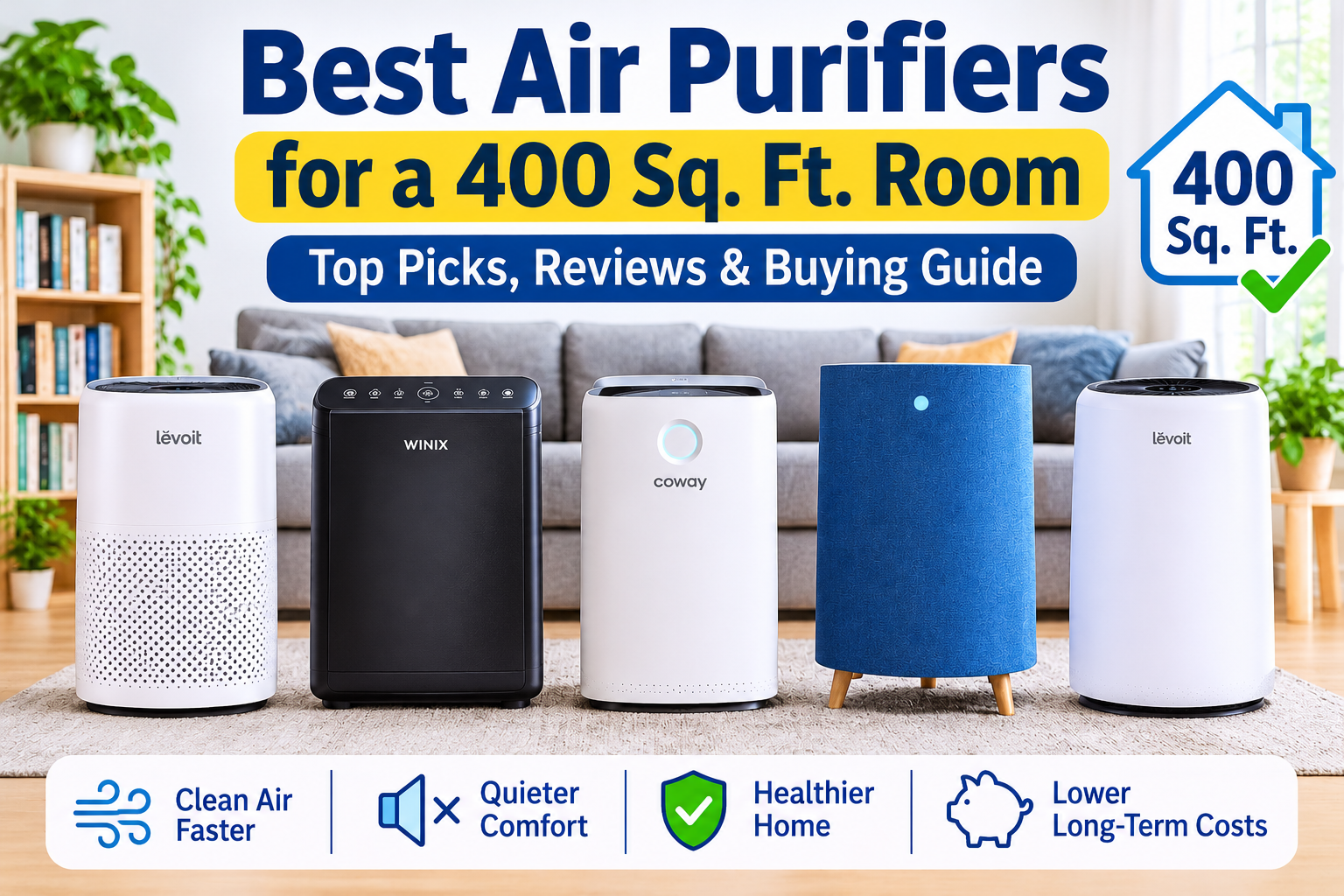
Choose a purifier suitable for the room where you intend to use it.
A purifier that is too small for the space may not provide the desired cleaning performance. Consider the recommended room size, airflow, and how frequently the air can be circulated through the unit.
5. Replacement Filter Cost
Check the price and availability of genuine replacement filters before purchasing the purifier.
A low initial purchase price may become less attractive if replacement filters are expensive or difficult to find.
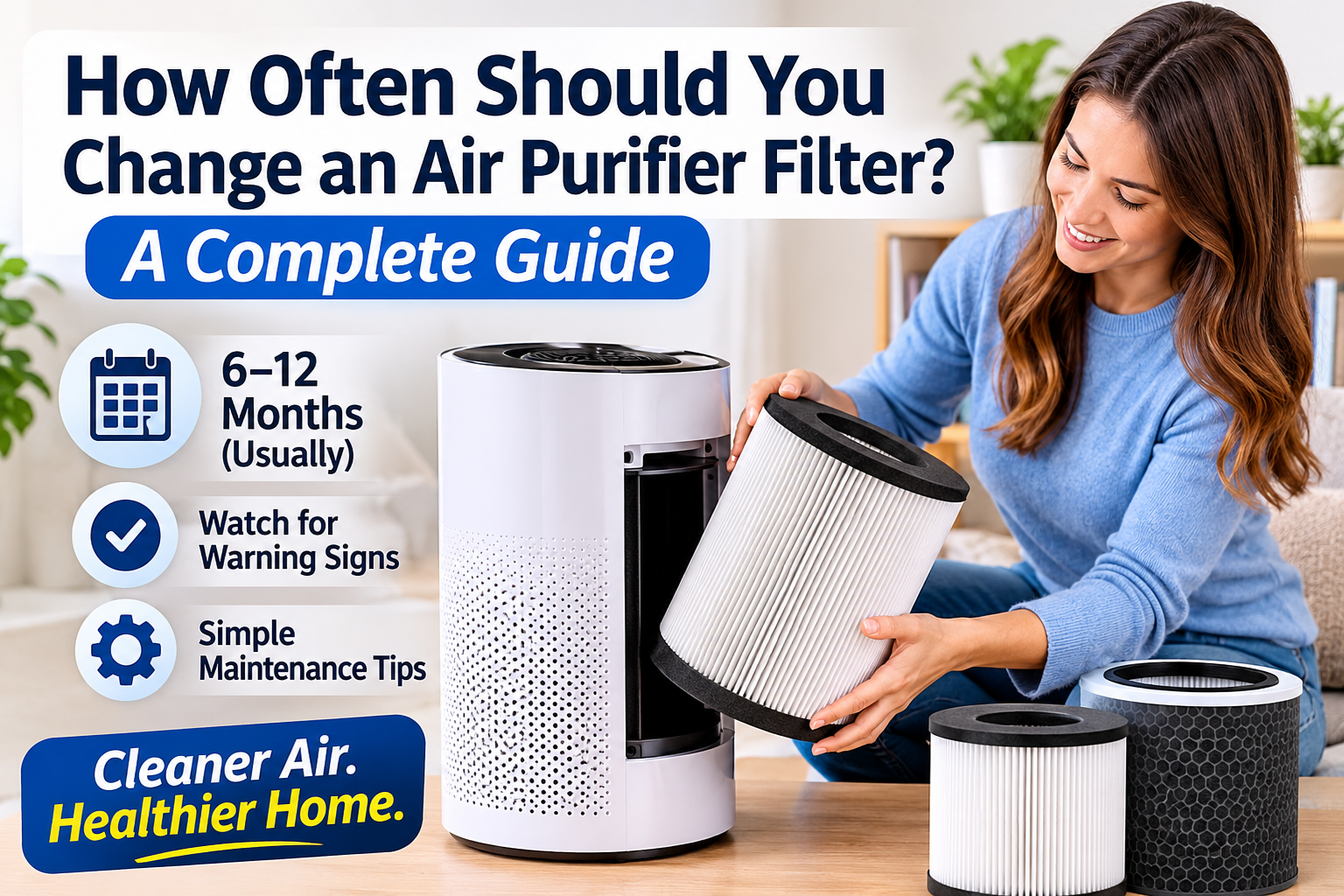
6. Filter Replacement Guidance
Different filters have different maintenance and replacement requirements.
Follow the manufacturer’s instructions for your exact model. Do not assume that HEPA and carbon filters have identical replacement intervals.
Frequently Asked Questions
1. Is HEPA Better Than Activated Carbon?
Neither is universally better. HEPA filters are designed to capture airborne particles, while activated carbon filters are designed to adsorb certain gases and odors. The better option depends on the pollutants you want to reduce.
2. Can a HEPA Filter Remove Odors?
A standard HEPA filter is not designed to remove gaseous odors. It can capture particles associated with smoke or other airborne sources, but an appropriate gas-phase filter such as activated carbon is needed for certain odor compounds.
3. Does Activated Carbon Remove Dust?
Activated carbon is not primarily designed for dust removal. A suitable particle filter, such as HEPA, is a better choice for dust, pollen, and pet dander.
4. Which Filter Is Better for Smoke?
For smoke particles, HEPA filtration is important. For certain smoke-related gases and odors, suitable activated carbon media may provide additional filtration. A combination system can address both categories, depending on its design.
5. Do I Need Both HEPA and Carbon Filters?
You may benefit from both if you want to reduce airborne particles as well as certain gases and odors. If your primary concern is particles, a suitable HEPA purifier may be sufficient.
6. Does Activated Carbon Remove VOCs?
Activated carbon can adsorb certain VOCs, but its effectiveness varies by compound, carbon type, quantity, and filter design. Not every carbon filter removes every VOC effectively.
7. What Is the Difference Between True HEPA and HEPA-Like?
True HEPA refers to a defined filtration efficiency specification. HEPA-like and HEPA-type are marketing descriptions that do not independently prove the filter meets that specification. Check the manufacturer’s technical documentation.
8. How Often Should Carbon Filters Be Replaced?
There is no universal replacement interval for every activated carbon filter. Its service life depends on carbon quantity, pollutant levels, usage, and manufacturer specifications. Follow the maintenance guidance for your exact air purifier model.
Final Verdict: HEPA vs. Carbon Filters
HEPA and activated carbon filters solve two different air-quality problems.
A HEPA filter captures airborne particles such as dust, pollen, pet dander, and many smoke particles. An activated carbon filter adsorbs certain gases and odors, including some VOCs, depending on its material and design.
If your main priority is reducing airborne particles, focus on a properly sized air purifier with suitable HEPA filtration. If you also want to address certain odors and gaseous pollutants, consider a model with an effective activated carbon stage.
For many households, a well-designed combination system offers broader filtration coverage. The key is to evaluate the actual filter specifications, airflow, room suitability, and replacement costs—not just the marketing claims on the box.
Better air purification starts with understanding what you want to remove and choosing the right filtration technology for that job.
About the Author
Kamal Kishor Raika writes about air purifiers, indoor air quality, filtration technology, and practical home air-cleaning solutions at BestAirPurifierOnline.com.