Indoor Air Quality Explained: Common Pollutants, Sources, and Solutions
Indoor air quality (IAQ) plays an important role in the comfort and health of your home. Although most people think about outdoor pollution, the air inside houses, apartments, and offices can also contain pollutants that affect everyday life.
Cooking, cleaning products, furniture, building materials, pets, moisture, and outdoor pollution can all influence the air you breathe indoors. In some situations, indoor pollutant concentrations may be higher than outdoor levels.
The good news is that there are practical ways to improve indoor air quality. Controlling pollution at its source, improving ventilation, managing moisture, and using appropriate air filtration can make a meaningful difference.
In this guide, you will learn what indoor air quality means, which pollutants commonly affect homes, where they come from, and how to create a cleaner indoor environment.
What Is Indoor Air Quality (IAQ)?
Indoor air quality refers to the condition of the air inside buildings, including homes, schools, offices, and other indoor spaces.
It is influenced by several factors, including:
- Airborne particles such as dust, smoke, and pollen
- Gases and chemicals released by household products
- Ventilation and the exchange of indoor and outdoor air
- Moisture levels and mold growth
- Emissions from cooking and fuel-burning appliances
- Temperature and relative humidity
Good indoor air quality generally means keeping indoor pollutants and exposure as low as reasonably achievable while maintaining appropriate ventilation and comfortable indoor conditions.
However, there is no single measurement that describes every aspect of indoor air quality. Different pollutants require different monitoring methods and control strategies.
Why Indoor Air Quality Matters
People spend a significant amount of their time indoors. That makes the quality of indoor air an important consideration for everyday comfort and long-term health.
Poor indoor air quality can contribute to:
- Eye, nose, and throat irritation
- Headaches and discomfort
- Coughing and breathing difficulties
- Allergic reactions
- Worsening asthma symptoms in susceptible individuals
Some pollutants, including carbon monoxide and radon, can create serious health risks even when they cannot be detected through smell or appearance.
Not every symptom indicates an indoor air problem. If symptoms persist, consult a qualified healthcare professional and consider whether an indoor environmental issue could be contributing.
Indoor vs. Outdoor Air Quality
Indoor and outdoor air quality are connected.
Outdoor pollutants can enter through open windows, doors, ventilation systems, and small building gaps. At the same time, indoor activities can generate additional pollutants.
For example:
- Vehicle emissions may enter homes near busy roads.
- Wildfire smoke can infiltrate buildings.
- Cooking can produce fine particles and gases.
- Cleaning products may release volatile organic compounds (VOCs).
- Damp building materials can support mold growth.
The relationship between indoor and outdoor air quality depends on building design, ventilation, filtration, weather, and indoor activities.
Common Indoor Air Pollutants
Understanding common indoor air pollutants is the first step toward controlling them.
1. Particulate Matter (PM2.5 and PM10)
Particulate matter consists of tiny solid particles and liquid droplets suspended in the air.
Two commonly discussed categories are:
- PM2.5: Fine particles with diameters of 2.5 micrometers or smaller.
- PM10: Particles with diameters of 10 micrometers or smaller.
Common indoor sources include:
- Cooking, especially frying and high-temperature cooking
- Tobacco smoke
- Candles and incense
- Fireplaces and wood-burning appliances
- Dust and other household activities
- Outdoor pollution entering the building
PM2.5 is particularly important because these small particles can penetrate deep into the respiratory system.
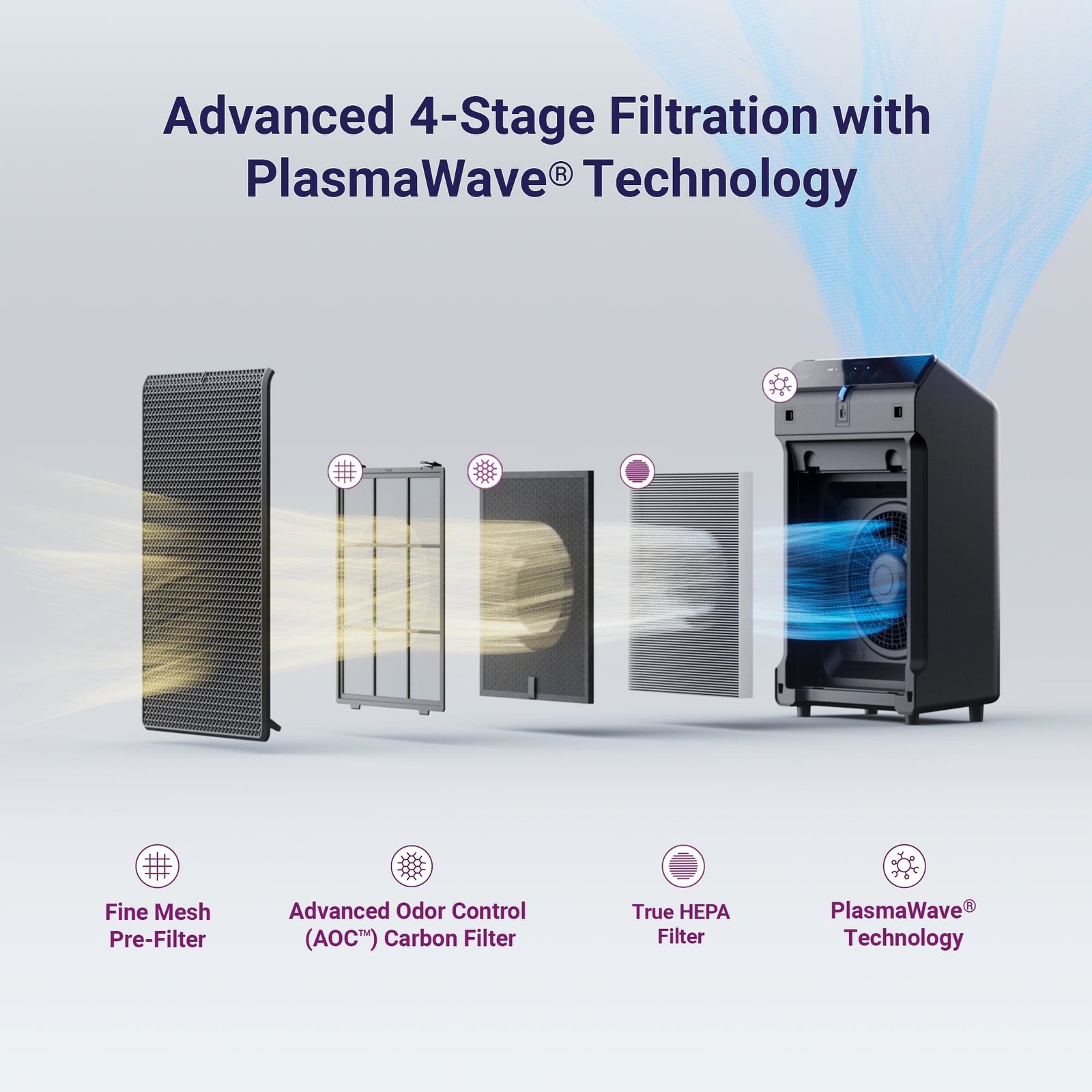
A properly sized mechanical air purifier with an effective HEPA filter can help reduce airborne particles. However, reducing emissions at the source remains important.
2. Volatile Organic Compounds (VOCs)
Volatile organic compounds are a group of chemicals that can evaporate into the air at room temperature.
They may be released by:
- Paints and varnishes
- Cleaning products
- Adhesives and solvents
- Air fresheners
- Some furniture and building materials
- Certain household and hobby products
Some VOCs can cause irritation, headaches, or other health effects depending on the chemical, concentration, and exposure duration.
Ways to reduce VOC exposure include:
- Choosing lower-emission products when practical
- Following product instructions
- Storing chemicals safely
- Avoiding unnecessary use of fragranced sprays
- Providing appropriate ventilation during and after product use
Activated carbon filters may help adsorb certain gaseous pollutants and odors. Their effectiveness depends on the type and quantity of carbon, the chemical involved, and operating conditions. A standard particle-only HEPA filter does not automatically remove VOCs.
3. Carbon Monoxide (CO)
Carbon monoxide is a colorless, odorless gas produced by incomplete combustion of fuels.
Potential household sources include:
- Gas-powered appliances
- Furnaces and water heaters
- Fireplaces
- Portable generators
- Vehicles operating in attached garages
- Improperly maintained fuel-burning equipment
Carbon monoxide is especially dangerous because people cannot reliably detect it through their senses.
Exposure can cause headache, dizziness, weakness, nausea, confusion, and potentially life-threatening poisoning.
Important safety advice: Install working carbon monoxide alarms according to manufacturer instructions and applicable local requirements. Have fuel-burning appliances inspected and maintained by qualified professionals.
If a CO alarm sounds or carbon monoxide exposure is suspected, move everyone outside to fresh air and contact emergency services. Do not rely on an air purifier to remove carbon monoxide.
4. Radon
Radon is a naturally occurring radioactive gas produced by the breakdown of uranium in soil and rock.
It can enter buildings through:
- Foundation cracks
- Gaps around pipes
- Construction joints
- Crawl spaces
- Other openings in contact with the ground
Radon is colorless and odorless. Long-term exposure increases the risk of lung cancer.
Because radon cannot be detected by smell or ordinary air quality monitors, testing is the reliable way to determine whether a building has elevated levels.
The U.S. Environmental Protection Agency recommends taking action when radon levels reach or exceed 4 picocuries per liter (pCi/L), while also noting that lower levels can still present some risk.
If testing indicates elevated radon, consult a qualified radon mitigation professional. A portable air purifier is not a substitute for radon testing or mitigation.
5. Mold and Biological Pollutants
Mold is a type of fungus that can grow in damp indoor environments.
Common locations include:
- Bathrooms
- Basements
- Damp walls and ceilings
- Water-damaged carpets
- Areas around leaking pipes
- Poorly ventilated spaces
Other biological pollutants may include dust mites, pet allergens, bacteria, and pollen.
Potential ways to reduce these pollutants include:
- Repairing water leaks promptly
- Drying wet materials
- Maintaining appropriate indoor humidity
- Cleaning regularly
- Washing bedding as appropriate
- Addressing visible mold and its moisture source
Air purifiers may reduce some airborne mold spores, but they do not eliminate mold growing on walls, carpets, or building materials.
The most important step is to correct the moisture problem and properly address mold contamination.
6. Smoke, Pollen, and Pet Dander
Other common pollutants can affect indoor air quality.
Smoke: Tobacco smoke, wildfire smoke, fireplaces, and cooking activities can release harmful particles and gases.
Pollen: Outdoor pollen can enter through windows, doors, clothing, and pets.
Pet dander: Small particles of skin, saliva, and other pet-related allergens can become airborne and settle on indoor surfaces.
A combination of regular cleaning, source control, appropriate ventilation, and effective particle filtration can help reduce exposure.
What Causes Poor Indoor Air Quality?
Indoor air quality is usually influenced by several sources rather than one single cause.
Cooking and Household Activities
Cooking can release particles and gases, particularly when frying, grilling, or using high temperatures.
To reduce cooking-related pollution:
- Use an externally vented range hood when available.
- Turn on kitchen exhaust ventilation while cooking.
- Avoid unnecessary burning of food.
- Maintain cooking appliances properly.
- Improve ventilation when outdoor air conditions allow.
Cleaning Products and Building Materials
Some cleaning products, paints, adhesives, and household materials release VOCs.
Consider choosing lower-emission products, using only the recommended amount, and following ventilation and safety instructions.
Do not mix household cleaning chemicals unless the product label specifically permits it. Some combinations can release dangerous gases.
Poor Ventilation
Ventilation helps remove indoor-generated pollutants and introduces outdoor air.
Poor ventilation can allow indoor pollutants to accumulate, particularly in tightly sealed buildings.
However, opening windows is not always the best solution. During wildfire smoke events, high outdoor pollution, or periods of elevated pollen, outdoor air may worsen indoor conditions.
Use ventilation based on outdoor air quality and the needs of the building.
Moisture and Water Damage
Excess moisture can create conditions that support mold growth.
Common causes include:
- Plumbing leaks
- Roof leaks
- Flooding
- Condensation
- Poor bathroom ventilation
- Inadequate drainage
Repair leaks, dry affected materials, and address the underlying moisture source rather than relying only on air filtration.
Outdoor Pollution Entering Your Home
Outdoor pollution can enter through windows, doors, ventilation systems, and building openings.
Common outdoor pollutants include traffic-related particles, wildfire smoke, dust, and pollen.
During periods of poor outdoor air quality, keep windows closed when appropriate, reduce indoor pollution sources, and use suitable filtration.
How Poor Indoor Air Quality Can Affect Your Health
The effects of indoor air pollution depend on the pollutant, concentration, exposure duration, and individual susceptibility.
Short-term exposure to certain pollutants may contribute to:
- Eye and throat irrit