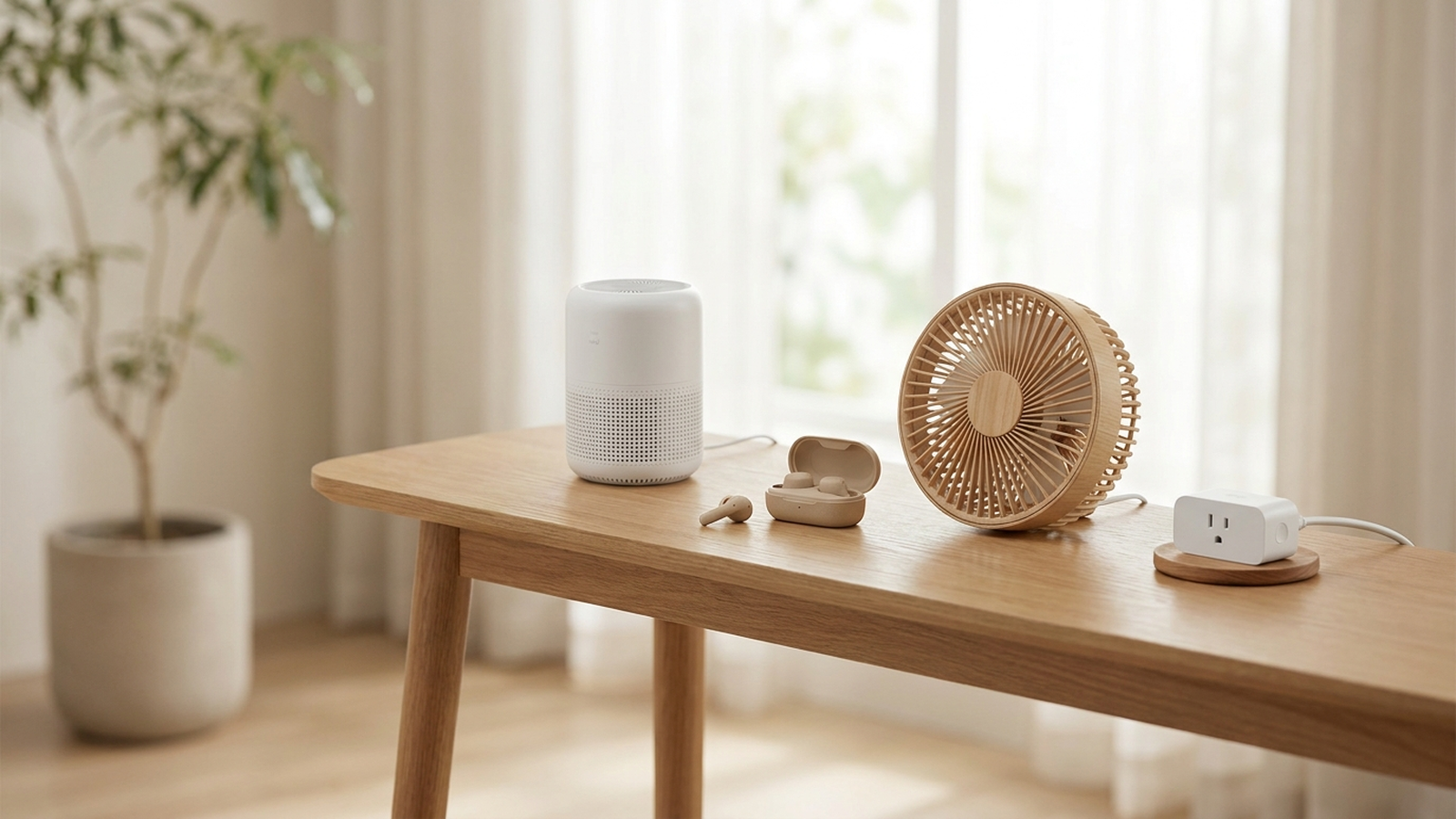
Winix Air Purifier Review: Features, Performance, and Pros & Cons
Choosing an air purifier is not just about buying a machine with a HEPA filter. You also need to consider its cleaning performance, room coverage, noise levels, replacement filter costs, and long-term maintenance.
Winix is a well-known air purifier brand in the US market. Its products combine mechanical filtration, activated carbon filters, automatic air-quality sensors, and—in selected models—PlasmaWave ionization technology.
But are Winix air purifiers actually worth buying? How do popular models such as the Winix 5530, 5500-2, and C909 compare? And is PlasmaWave something you should use?
In this guide, we examine Winix’s filtration technology, independent performance measurements, maintenance requirements, advantages, limitations, and alternatives to help you make an informed decision.
Is Winix a Good Air Purifier Brand?
Winix is worth considering if you want a combination of particle filtration, automatic operation, and practical features without necessarily paying premium-brand prices.
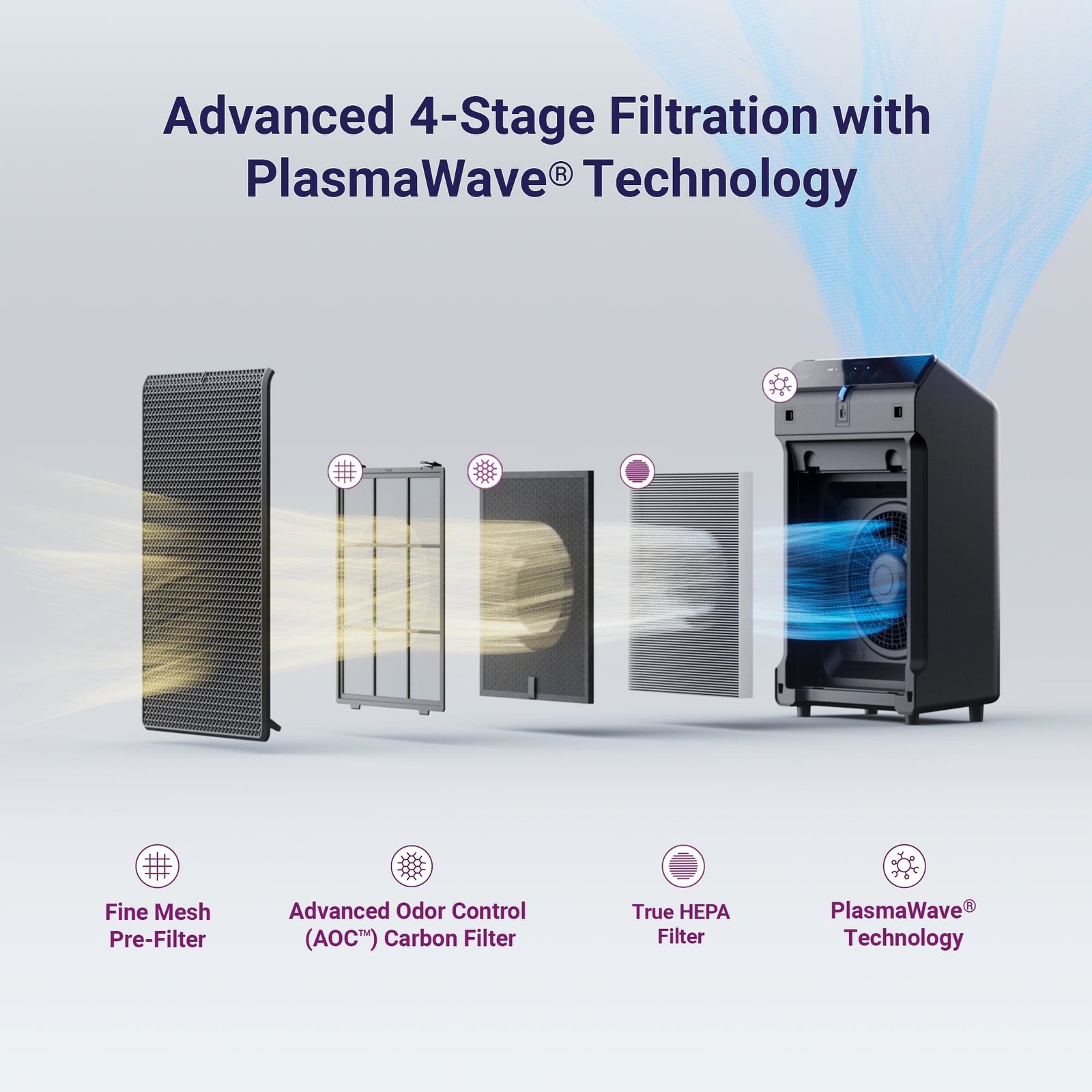
Several Winix models use a multi-stage filtration system that includes:
- A washable pre-filter for larger particles and debris.
- A True HEPA filter for fine airborne particles.
- An activated carbon filter for certain odors and gases.
- PlasmaWave technology on selected models.
Some newer models also offer Wi-Fi connectivity, smartphone controls, air-quality sensors, and automatic fan adjustment.
However, not every Winix purifier has the same specifications. Room coverage, filter design, connectivity, and warranty terms vary by model. It is important to compare the exact model rather than assuming that every product in the Winix lineup performs identically.
Winix Air Purifier Lineup: Which Models Should You Consider?
Winix offers several air purifiers for different room sizes and budgets. The following models are useful starting points when comparing its product range.
1. Winix 5530
The Winix 5530 is a mid-range model designed for medium to large rooms. It combines a washable pre-filter, True HEPA filtration, pellet-based activated carbon, and PlasmaWave technology.
Its key features include:
- Three physical filtration layers.
- Optional PlasmaWave ionization.
- Wi-Fi connectivity through the Winix Smart app.
- Automatic fan adjustment using an air-quality sensor.
- Sleep mode and multiple fan speeds.
- A filter replacement indicator.
In independent testing, RTINGS measured a PM1.0 CADR of approximately 258 CFM at maximum fan speed. At a quieter setting below 45 dBA, the measured figure was approximately 122 CFM.
These are independent PM1.0 particle-filtration measurements, not the model’s official AHAM CADR ratings. RTINGS also measured noise levels of approximately 32.4 dBA at the lowest speed and 60.7 dBA at the highest speed.
The results suggest that the 5530 can deliver strong particle filtration, although maximum performance comes with more noticeable fan noise. Source: RTINGS Winix 5530 Review.
2. Winix 5500-2
The Winix 5500-2 is an older but popular model that remains relevant to buyers looking for a relatively straightforward air purifier.
Its main features include:
- Washable pre-filter.
- True HEPA filter.
- Washable Advanced Odor Control carbon filter.
- PlasmaWave technology that can be switched off.
- Automatic mode and air-quality monitoring.
- No Wi-Fi or smartphone app connectivity.
The 5500-2 is often considered a value-oriented option, particularly when sold at a competitive price.
Its user manual lists a verified room size of approximately 370 square feet and a two-year limited warranty. Actual cleaning performance depends on the room, operating speed, and desired air-change rate. Source: Winix 5500-2 User Manual.
One important consideration is that it is an older model. Before purchasing, check the availability and price of genuine replacement filters.
3. Winix C909
The Winix C909 is a larger-capacity model available through Costco and other retail channels when stocked.
Its features include:
- True HEPA filtration.
- Activated carbon filtration.
- PlasmaWave technology.
- Wi-Fi connectivity.
- Automatic fan adjustment.
- Air-quality monitoring.
- Sleep and other operating modes.
RTINGS measured a PM1.0 CADR of approximately 294 CFM at maximum speed and 198 CFM at a quieter setting below 45 dBA. These figures indicate strong particle-cleaning performance, especially at quieter operating speeds.
The C909 is worth comparing with the 5530 if you need more cleaning capacity and have enough floor space. Independent testing found that the C909 performed better at quieter settings, while the 5530 had a smaller footprint. Source: RTINGS Winix C909 vs. 5530.
4. Other Winix Models
Winix also sells or lists other models, including the 5510, 5520, A231, T810, and AT40.
Their availability can vary by retailer and over time. Check the official Winix website for current product listings, specifications, and compatible replacement filters before buying.
How Do Winix Air Purifiers Work?
Most Winix air purifiers rely primarily on mechanical filtration. They draw room air through a series of filters, capture airborne particles, and circulate the cleaned air back into the room.
Understanding each stage helps explain what a Winix purifier can—and cannot—do.
1. Pre-Filter
The pre-filter is the first stage of filtration.
It captures larger particles such as:
- Pet hair.
- Visible dust.
- Lint.
- Larger airborne debris.
A washable pre-filter can help protect the finer filters from collecting larger debris too quickly.
Follow the instructions for your specific model when cleaning it. Some pre-filters are washable, while others have different maintenance requirements.
2. True HEPA Filter
The HEPA filter is the most important component for capturing fine airborne particles.
A genuine HEPA filter is generally defined by its ability to remove at least 99.97% of particles measuring 0.3 microns under specified test conditions.
It can capture many common airborne pollutants, including:
- Fine dust.
- Pollen.
- Pet dander.
- Mold spores.
- Some smoke particles.
However, filter efficiency is not the same as whole-room cleaning performance. The amount of air the purifier processes, the filter’s sealing, and the room’s conditions also matter.
Do not wash a disposable HEPA filter unless the manufacturer specifically identifies it as washable. Washing can damage its filtration material.
3. Activated Carbon Filter
The activated carbon filter helps reduce certain odors and gaseous pollutants through adsorption.
Depending on the carbon type, quantity, and design, it may help with:
- Cooking odors.
- Pet odors.
- Some household smells.
- Certain volatile organic compounds (VOCs).
Carbon filtration has limitations. A thin carbon layer may have limited capacity, especially in homes with persistent chemical emissions or strong odors.
If gas removal is a major priority, compare the amount and type of carbon used rather than relying only on the phrase “activated carbon.”
4. PlasmaWave Technology
PlasmaWave is an additional ionization technology used in selected Winix models.
It is designed to generate positive and negative ions that interact with airborne pollutants. It is not a physical filter and should not be treated as a replacement for HEPA filtration.
Some Winix models allow users to switch PlasmaWave off independently. This is useful if you prefer to operate the purifier using its mechanical filtration system alone.
Winix Air Purifier Performance: CADR and Room Coverage
CADR stands for Clean Air Delivery Rate. It measures how quickly an air purifier delivers filtered air for specific particle categories.
The three commonly reported CADR categories are:
- Smoke.
- Dust.
- Pollen.
A higher CADR generally indicates faster particle removal under the relevant test conditions.
When selecting a Winix model, compare its CADR with your room size and the number of air changes you want per hour.
A useful formula is:
Required CADR (CFM) = Room Volume (cubic feet) × Desired ACH ÷ 60
For example, consider a room measuring 15 feet × 15 feet with an 8-foot ceiling.
Room volume:
15 × 15 × 8 = 1,800 cubic feet.
For five air changes per hour:
1,800 × 5 ÷ 60 = 150 CFM.
This means you would need approximately 150 CFM of effective clean-air delivery to achieve five air changes per hour under these simplified assumptions.
Remember that manufacturer room-size ratings may use different assumptions. Always check the test standard and coverage conditions before comparing models.
For a deeper explanation, read our guide: What Is CADR in Air Purifiers? Understanding Clean Air Delivery Rate.
Is Winix PlasmaWave Safe?
PlasmaWave is one of the most discussed features of Winix air purifiers.
The technology uses ionization rather than relying entirely on mechanical filtration. Some buyers appreciate having an additional air-treatment feature, while others prefer to avoid ionization technologies.
The main consideration is ozone.
Certain ionization and electronic air-cleaning technologies can produce ozone as a byproduct. Ozone is a respiratory irritant, and exposure should be minimized.
Winix states that its PlasmaWave technology is designed to remain below the applicable ozone-emission limit. However, product-specific testing and operating conditions matter.
Here are some practical points:
- PlasmaWave is not necessary for the HEPA filter to capture particles.
- Some Winix models allow you to turn PlasmaWave off.
- You can continue using the mechanical filtration system with PlasmaWave disabled.
- People concerned about ozone or who are sensitive to respiratory irritants may prefer to keep the feature off.
- Look for independent emissions information and applicable certification when evaluating a specific model.
For most buyers, the core value of a Winix purifier comes from its fan, filter design, and clean-air delivery—not from ionization alone.
Noise Levels and Energy Consumption
Noise is important because air purifiers are often operated for many hours each day.
A purifier may have excellent maximum-speed performance, but if it is too loud for your bedroom or office, you may avoid using it at the speed that delivers the most clean air.
RTINGS measured the Winix 5530 at approximately:
| Operating condition | Measured noise |
|---|---|
| Lowest fan speed | 32.4 dBA |
| Highest fan speed | 60.7 dBA |
The difference is significant. The lowest setting is suitable for quieter environments, while the highest setting may be distracting in a quiet bedroom.
Energy consumption also depends on the fan speed and model. Higher fan speeds generally use more electricity.
To estimate running costs:
Annual electricity cost = Power consumption (kW) × Hours per day × Days per year × Electricity rate
For example, a 40-watt purifier operating continuously uses:
0.04 kW × 24 × 365 = 350.4 kWh per year.
Multiply this figure by your electricity rate to estimate annual operating costs.
Use the actual power rating for your chosen model rather than applying one model’s energy consumption to the entire Winix lineup.
Winix Replacement Filters and Maintenance Costs
Replacement filters are an important part of the total cost of owning an air purifier.
Even an affordable purifier can become expensive if its replacement filters are costly or difficult to find.
Winix sells model-specific replacement filters, including Filter A, Filter H, Filter U, and other filter types.
Prices listed on the official US website have included examples such as:
| Replacement filter | Listed price |
|---|---|
| Filter A | $84.99 |
| Filter H | $84.99 |
| Filter U | $19.99 |
These are website-listed prices observed during research, not guaranteed current prices. Confirm the latest price and model compatibility before ordering. Source: Winix Genuine Replacement Filters.
How Often Should You Replace Winix Filters?
Replacement schedules depend on the model and filter type.
Winix provides model-specific guidance. Some models use a washable pre-filter, while disposable HEPA and carbon filters have their own replacement intervals.
For example, the 5500-2 uses a washable pre-filter, a True HEPA filter, and a washable AOC carbon filter.
Do not assume that every Winix model uses the same filter or replacement schedule.
Before ordering:
- Identify your exact model number.
- Check the compatible filter listed by Winix.
- Read the replacement interval in the user manual.
- Check the filter indicator where available.
- Compare genuine filter prices and availability.
You can also read our guides:
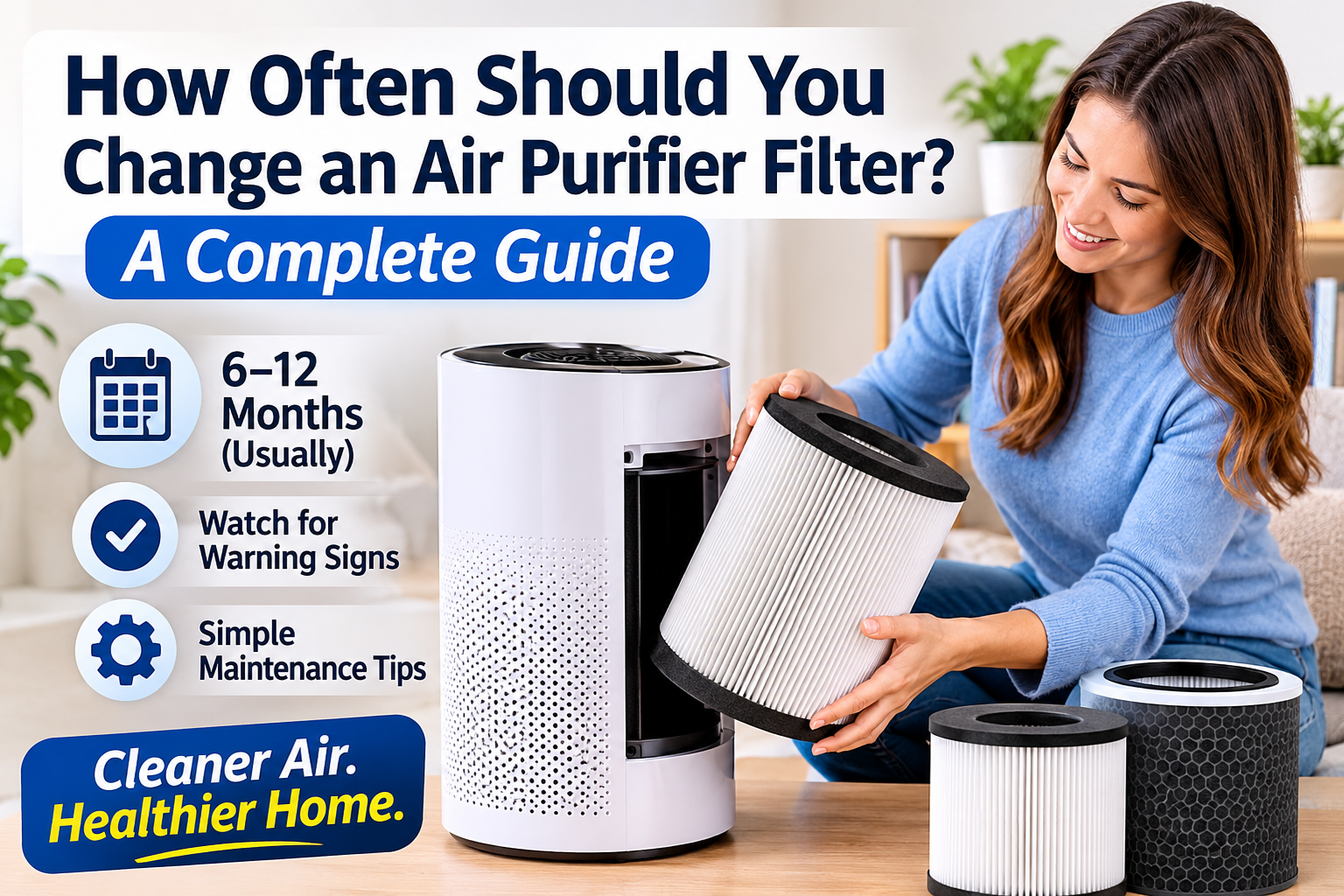
- How Often Should You Change an Air Purifier Filter?
- HEPA vs. Carbon Filters: What’s the Difference?
- How to Clean an Air Purifier Filter
Smart Features, Auto Mode, and Sleep Mode
Winix includes different convenience features depending on the model.
Air-Quality Sensor and Auto Mode
Selected models monitor changes in indoor air quality and automatically adjust the fan speed.
This can be useful when cooking, cleaning, or dealing with changing particle levels.
However, an onboard sensor does not measure every indoor pollutant. A particle sensor, for example, cannot provide a complete assessment of gases such as carbon monoxide or radon.
Wi-Fi and Smartphone App
Some Winix models offer smartphone connectivity through the Winix Smart app.
Depending on the model, app features may include:
- Remote control.
- Fan-speed adjustment.
- Operating-mode selection.
- Timer settings.
- Air-quality monitoring.
The 5500-2 does not offer the same app connectivity as the 5530 or C909.
Sleep Mode
Sleep mode reduces operating noise and may dim the display or respond to room lighting, depending on the model.
This feature is useful for bedrooms, but remember that lower fan speeds also deliver less clean air.
Winix Air Purifier: Pros and Cons
Every air purifier has strengths and limitations. Here is a practical summary of the Winix range.
Pros
1. Multi-stage filtration
Many Winix models combine a pre-filter, HEPA filtration, and activated carbon to address different types of indoor pollutants.
2. Good particle-cleaning performance
Independent testing of the 5530 and C909 shows that selected Winix models can deliver strong particle-filtration performance.
3. Washable pre-filters on selected models
A washable pre-filter can make routine maintenance easier and help capture larger debris before it reaches the finer filters.
4. Automatic operation
Air-quality sensors and Auto mode are useful features for people who do not want to adjust fan speeds manually throughout the day.
5. Optional PlasmaWave
On models where the feature can be disabled, users have the choice of operating the purifier without ionization.
6. Multiple model options
Winix offers products for different room sizes, budgets, and feature requirements.
Cons
1. Maximum fan speed can be loud
Independent testing shows that some models become noticeably louder at their highest fan settings.
2. Replacement filters add recurring costs
Genuine HEPA and carbon filters need replacement according to the model’s maintenance schedule.
3. PlasmaWave may not suit everyone
Buyers who prefer to avoid ionization technologies may choose to keep the feature switched off or select a purifier without an ionizer.
4. Features differ across models
Not every Winix purifier offers Wi-Fi, app control, or the same filter configuration.
5. Room coverage needs careful checking
A manufacturer’s advertised room size should not be treated as a guarantee of the same air-change rate in every room.
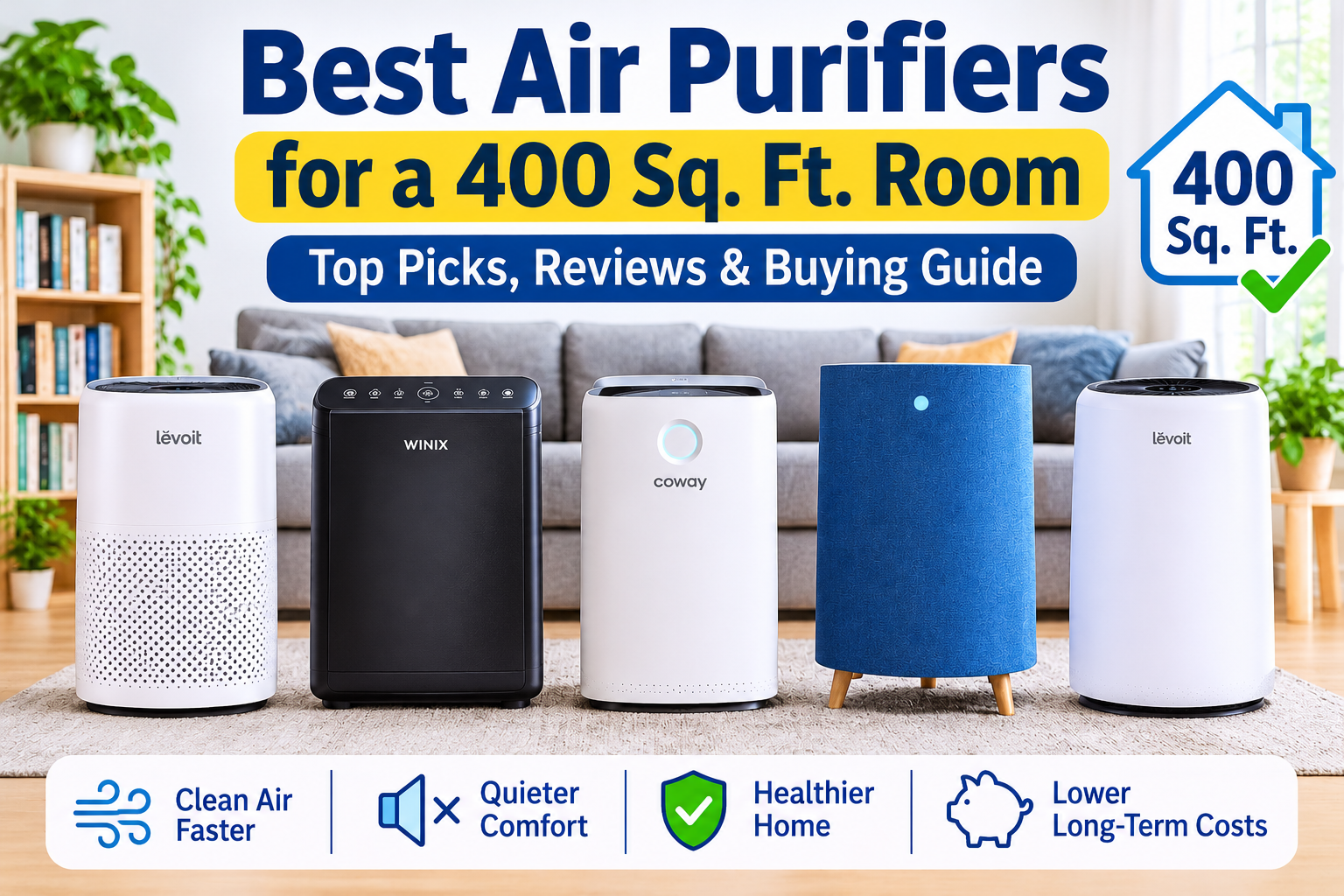
Winix vs. Coway vs. Levoit vs. Blueair
Winix competes with several established air purifier brands. The best option depends on your priorities.
| Brand | What to consider | Best comparison point |
|---|---|---|
| Winix | HEPA filtration, carbon, optional PlasmaWave and smart features | Feature-rich mid-range options |
| Coway | Established mechanical filtration models and straightforward controls | Models such as the Airmega 200M and Mighty |
| Levoit | Broad range of compact and smart air purifiers | Core and Vital series |
| Blueair | HEPASilent technology and models for larger rooms | Blue Pure Max range |
Winix vs. Coway
Coway is worth considering if you prefer a more traditional mechanical filtration approach.
Winix may appeal more if you want features such as app connectivity on models like the 5530.
Compare the exact models’ CADR, noise levels, filter prices, and certification details before choosing.
Winix vs. Levoit
Levoit offers a wide range of products, from compact bedroom purifiers to larger smart models.
Winix may be attractive if you want a washable pre-filter, pellet-based carbon on selected models, and optional PlasmaWave.
Levoit may be preferable if a particular model better matches your room size, design preferences, or budget.
Winix vs. Blueair
Blueair is known for its HEPASilent filtration technology and its range of products for medium and large rooms.
Winix offers a different approach, with mechanical filtration and optional PlasmaWave on selected products.
Compare the particle-cleaning performance at the noise level you are comfortable using, not just the maximum CADR.
For detailed brand comparisons, read our reviews:
Who Should Buy a Winix Air Purifier?
Winix can be a good option for several types of households.
Pet Owners
A Winix model with a washable pre-filter can help capture pet hair, while its HEPA filter captures airborne pet dander.
Activated carbon may also help reduce some everyday pet odors, depending on the filter design and carbon quantity.
Bedroom Users
If you need an air purifier for a bedroom, consider the noise level at the fan speed you will actually use overnight.
A model that delivers adequate cleaning at a quieter setting is often more practical than one that only performs well at maximum speed.
Allergy-Sensitive Households
A properly sized purifier with an effective HEPA filter can reduce airborne particles such as pollen, dust, and pet dander.
It does not eliminate every allergy trigger. Regular cleaning, moisture control, and reducing pollutant sources remain important.
Buyers Looking for Smart Features
Models such as the 5530 offer app connectivity and automatic operation.
If remote control and air-quality monitoring matter to you, compare these features before purchasing.
Frequently Asked Questions
1. Are Winix air purifiers worth buying?
Winix air purifiers are worth considering if their filtration performance, features, room coverage, and replacement-filter costs match your needs.
Compare the exact model rather than choosing based on the brand name alone.
2. Is Winix better than Levoit?
Neither brand is automatically better for every buyer.
Compare specific models based on CADR, noise, filter costs, room coverage, and features. A larger model from one brand may outperform a compact model from another.
3. Does Winix use True HEPA filters?
Several Winix models use True HEPA filters, including the 5530 and 5500-2.
Always verify the exact model’s filter specifications. Do not assume that every product in a brand’s lineup uses identical filtration.
4. Is Winix PlasmaWave safe?
PlasmaWave is an ionization technology and may produce ozone as a byproduct.
Winix states that its technology is designed to meet applicable ozone-emission limits. If you prefer to avoid ionization or are sensitive to respiratory irritants, use the off setting on models that provide it.
5. Can I turn off PlasmaWave?
Some Winix models allow PlasmaWave to be switched off independently.
Check the user manual for your specific model to confirm how the feature is controlled.
6. How often should I replace Winix filters?
Replacement intervals depend on the model and filter type.
Follow the official user manual and filter indicator rather than applying one universal replacement schedule to every Winix purifier.
7. Is the Winix 5500-2 still worth buying?
It can be worth considering if you find it at a competitive price and can still obtain genuine replacement filters.
However, it is an older model without the app connectivity found on some newer Winix products.
8. Which Winix air purifier is best for a large room?
Compare models such as the 5530 and C909 using their verified CADR, room coverage, and noise measurements.
The right choice depends on your room dimensions and desired air changes per hour, not just the largest advertised room-size figure.
Final Verdict: Are Winix Air Purifiers Worth It?
Winix offers a practical range of air purifiers with mechanical filtration, activated carbon, and useful features such as automatic fan adjustment and smartphone connectivity on selected models.
The Winix 5530 is an interesting option for buyers who want strong particle filtration, app control, and a washable pre-filter. The C909 is worth comparing if you need stronger low-noise performance and have more available floor space. The older 5500-2 may still appeal to value-focused buyers, provided genuine replacement filters remain available.
However, no single Winix model is the best choice for everyone.
Before purchasing, check five things:
- The purifier’s CADR for your room size.
- Its noise level at your preferred operating speed.
- The type and replacement cost of its filters.
- Whether you want Wi-Fi and PlasmaWave features.
- The current warranty and availability of genuine filters.
A properly sized air purifier, operated consistently and maintained according to its manual, is generally more useful than a larger machine that is rarely run because it is too noisy or expensive to maintain.
Our recommendation: Shortlist Winix models based on independent particle-filtration results and total ownership cost. Then compare them with equivalent Coway, Levoit, and Blueair models before making your final decision.
SEO Publishing Details
SEO Title: Winix Air Purifier Review: Is It Worth Buying in 2027?
Meta Description: Read our Winix air purifier review covering the 5530, 5500-2, and C909. Compare filtration, PlasmaWave, CADR, noise, filter costs, and pros and cons.
URL Slug: winix-air-purifier-review
Focus Keyword: Winix air purifier review
Secondary Keywords:
- Winix 5530 review
- Winix 5500-2 review
- Winix C909 review
- Winix PlasmaWave
- Winix air purifier pros and cons
- Winix replacement filters
Suggested Tags: Winix, Air Purifier Reviews, HEPA Filters, Indoor Air Quality, Air Purifier Comparison
Featured Image Filename: winix-air-purifier-review-guide.webp
Featured Image Alt Text: Winix air purifier in a modern home interior
Author: Kamal Kishor Raika