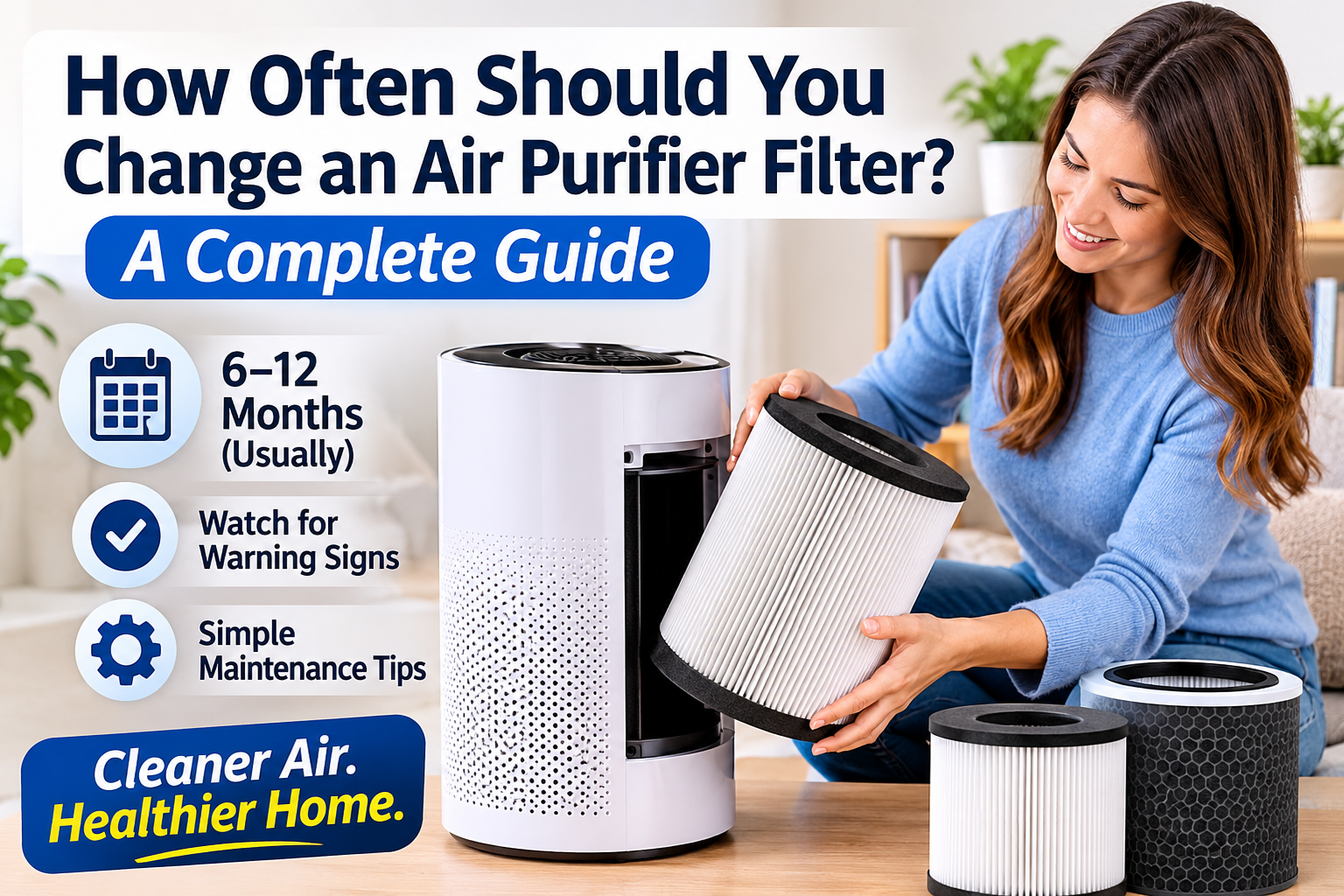
Best Air Purifier Replacement Filters: How to Choose the Right One
Replacing an air purifier filter sounds simple: find a replacement, install it, and turn the purifier back on. But choosing the wrong filter can lead to poor fit, reduced airflow, and filtration performance that does not match your expectations.
With so many original, compatible, aftermarket, HEPA, and activated carbon filters available online, it can be difficult to know which replacement is worth buying.
The most important rule is simple: choose a filter that is compatible with your exact air purifier model and has credible information supporting its filtration performance.
In this guide, we’ll explain the different types of replacement filters, how to identify the correct model, how OEM and aftermarket options compare, and what to check before placing an order.
Why Choosing the Right Replacement Filter Matters
An air purifier is designed to move room air through a filtration system. The filter needs to fit correctly and allow air to pass through the intended filtration media.
An unsuitable replacement can create several problems:
- Poor fit: The filter may not sit securely inside the purifier.
- Air bypass: Air may travel around the filter instead of passing through the filtration material.
- Reduced airflow: An unsuitable filter design may interfere with the purifier’s intended airflow.
- Uncertain filtration: A replacement may advertise HEPA performance without providing adequate supporting information.
- Additional costs: A cheap filter that needs frequent replacement may cost more over time.
The filter is not simply an accessory. It is an important part of the purifier’s overall performance.
Before comparing prices or brands, identify the exact replacement specification required by your appliance.
How to Find Your Air Purifier Model Number
The first step is identifying the exact model of your air purifier.
A manufacturer’s product family may contain several models that look similar but use different replacement filters.
1. Check the Product Identification Label
Look for a model number printed on the purifier itself.
Common locations include:
- The back panel
- The bottom of the unit
- The side of the housing
- Near the power cord
- Inside or behind the filter compartment
The model number may include letters, numbers, and suffixes.
Record the complete number rather than only the brand or product series.
2. Check the Original User Manual
The user manual often includes:
- Compatible replacement filter numbers
- Filter dimensions or specifications
- Replacement instructions
- Manufacturer support information
- Maintenance recommendations
If you no longer have the printed manual, search for the exact model on the manufacturer’s official website.
3. Check the Existing Filter
Some replacement filters have a part number or product code printed on the frame or packaging.
Compare that information with the manufacturer’s replacement recommendations.
Do not rely on appearance alone. Two filters may look almost identical but have different internal construction or compatibility requirements.
4. Pay Attention to Model Suffixes
Model suffixes can matter.
For example, products within the same series may have different revisions, regional versions, or filter configurations.
Do not assume that a replacement listed for one model automatically fits every model in the same product family.
Buying tip: Search using the complete purifier model number together with the words “replacement filter.” Then verify the result against the manufacturer’s compatibility information.
Types of Air Purifier Replacement Filters
Different filters target different categories of indoor air pollutants. Understanding their functions helps you select the correct replacement.
1. True HEPA Replacement Filters
HEPA filters are designed to capture airborne particles as air passes through their filtration media.
They can help reduce:
- Dust
- Pollen
- Pet dander
- Mold spores
- Many airborne smoke particles
- Other suspended particulate matter
In the United States, a commonly cited True HEPA benchmark is at least 99.97% efficiency for particles measuring 0.3 microns under specified test conditions.
When purchasing a replacement HEPA filter, check the manufacturer’s technical specifications and whether the filter is designed for your exact purifier model.
Do not assume that every product described as HEPA-type or HEPA-like meets the same performance specification.
2. Activated Carbon Replacement Filters
Activated carbon filters are designed to adsorb certain gases and odor-causing compounds.
They may help reduce selected:
- Household odors
- Cooking odors
- Smoke-related odors
- Volatile organic compounds (VOCs)
- Other gaseous pollutants, depending on the carbon media
The amount and type of carbon matter.
A thin carbon-coated sheet and a deeper carbon media bed may have very different adsorption capacities.
If odor and gas filtration are important, look for information about carbon quantity, construction, and tested performance rather than relying only on the phrase “activated carbon.”
3. Combination HEPA and Carbon Filters
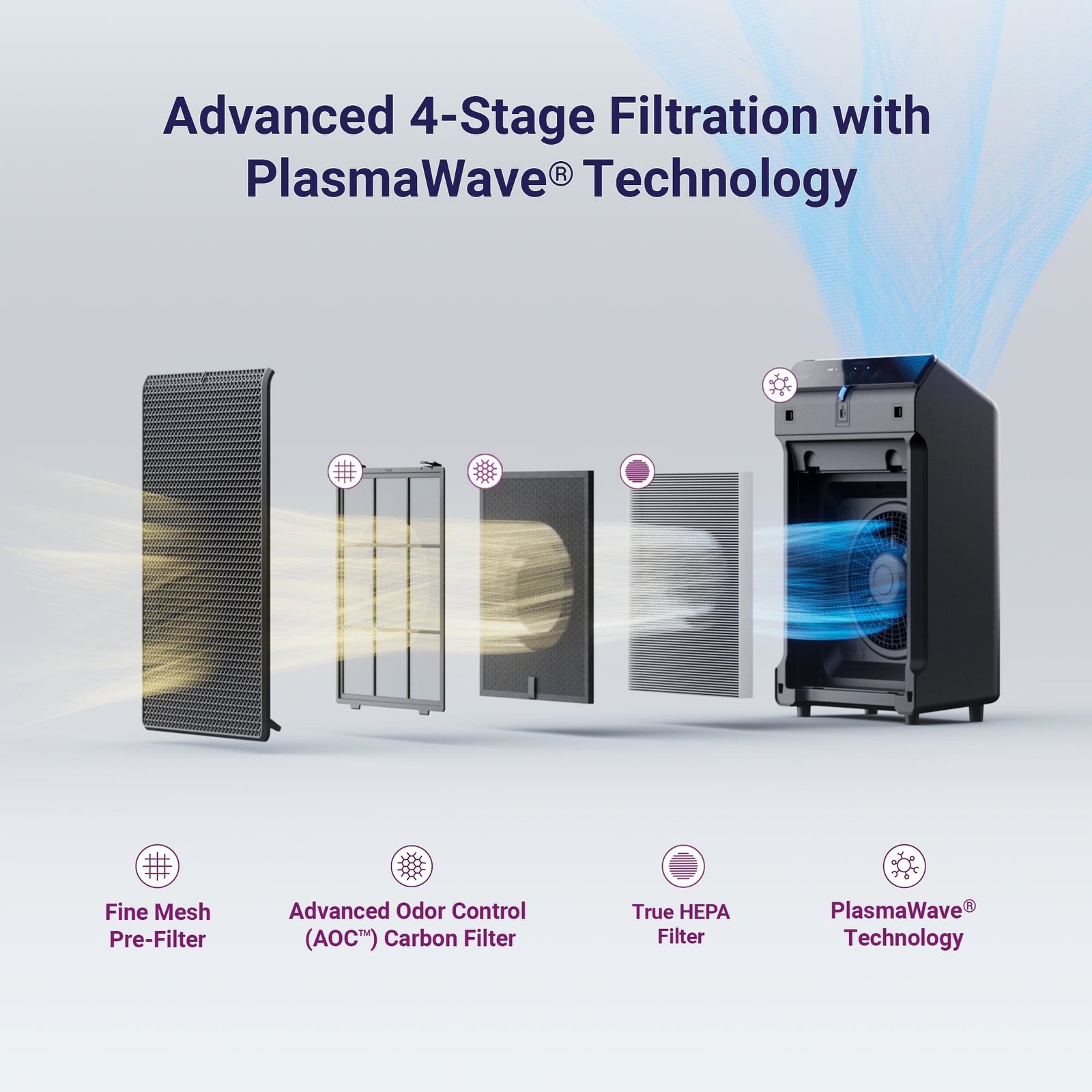
Some air purifiers use a single replacement cartridge containing both particle filtration media and activated carbon.
These combination filters can address two different categories of pollutants:
- HEPA media captures airborne particles.
- Activated carbon adsorbs certain gases and odors.
Before buying, confirm whether your purifier requires a combination cartridge or separate filter components.
4. Pre-Filters
Pre-filters capture larger debris before air reaches the main filtration stages.
Depending on the model, they may collect:
- Hair
- Lint
- Larger dust particles
- Visible household debris
Some pre-filters are washable, while others are disposable or vacuum-cleanable only.
Follow the maintenance instructions for your exact model.
5. Permanent Washable Filters
Some air purifiers use permanent or reusable filtration systems.
Certain electrostatic and ifD filters are designed for repeated cleaning rather than routine replacement.
These should not be confused with disposable HEPA filters.
Check the manufacturer’s instructions to determine whether the filter can be washed, how it should be dried, and whether any components still require periodic replacement.
OEM vs. Aftermarket Air Purifier Filters
One of the most common buying decisions is whether to purchase an original replacement filter or a compatible aftermarket alternative.
What Is an OEM Filter?
OEM stands for Original Equipment Manufacturer.
In the replacement-filter context, OEM generally refers to an original replacement specified or supplied by the purifier manufacturer.
Potential advantages include:
- Manufacturer-documented compatibility
- Clearer replacement part identification
- Specifications designed for the relevant purifier
- Access to official support and replacement guidance
However, an original filter is not automatically the best choice for every budget or application. Buyers should still compare its specifications, price, and availability.
What Is an Aftermarket Filter?
An aftermarket filter is produced by a third-party manufacturer rather than being the original replacement supplied by the purifier brand.
Some aftermarket filters are designed for specific purifier models and may cost less than original replacements.
However, quality and performance can vary.
Before buying one, investigate:
- Exact model compatibility
- Filter dimensions and construction
- Sealing and gasket design
- HEPA performance documentation
- Carbon media quantity and type
- Seller reputation
- Return and warranty conditions
OEM vs. Aftermarket: Side-by-Side Comparison
| Buying Factor | OEM Filter | Aftermarket Filter |
|---|---|---|
| Compatibility information | Usually manufacturer-documented | Depends on the seller |
| Original specifications | Designed around manufacturer requirements | Must be independently checked |
| Price | Often higher | May be lower |
| Product selection | Depends on manufacturer availability | Can offer more options |
| Performance evidence | May have official documentation | Quality of evidence varies |
| Return conditions | Manufacturer or retailer terms | Seller-specific terms |
An aftermarket filter should not automatically be considered inferior. Likewise, a lower price does not prove that a replacement offers equivalent performance.
Compare actual specifications and supporting evidence before deciding.
What Is AHAM Replacement Filter Verification?
The Association of Home Appliance Manufacturers (AHAM) has introduced a replacement air filter performance verification program.
The initiative is intended to help consumers evaluate replacement filter performance using a more consistent verification approach.
When comparing replacement filters, look for relevant verification information and confirm that it applies to the particular filter being sold.
A verification claim should never be assumed to apply to every product made by a brand.
How to Check Air Purifier Filter Compatibility
Compatibility is one of the most important factors in replacement-filter shopping.
A filter that physically resembles the original may still be unsuitable.
Use this checklist before buying.
1. Match the Exact Model Number
Start with the complete purifier model number.
Check the replacement listing against the manufacturer’s compatibility documentation.
Do not rely on broad descriptions such as “fits most Levoit models” or “universal air purifier filter” without model-specific confirmation.
2. Verify the Replacement Part Number
If your manufacturer provides a replacement filter part number, use it as a reference.
Compare the number on the official product page with the number shown by the seller.
If the seller lists several compatible models, confirm that your exact model is included.
3. Check Dimensions and Shape
Compare the replacement filter’s:
- Height
- Width
- Depth
- Diameter, if cylindrical
- Frame shape
- Filter orientation
Correct dimensions are important, but dimensions alone do not establish complete compatibility.
4. Check Sealing and Gasket Design
The filter should sit securely in its intended compartment.
Gaskets, seals, and frame construction help direct air through the filtration media.
If a filter does not seal correctly, some air may bypass the filtration material.
5. Check the Filter Configuration
Determine whether your purifier uses:
- Separate pre-filter and HEPA components
- Separate HEPA and carbon cartridges
- A combined HEPA-carbon filter
- A permanent washable filter
- A proprietary multi-stage cartridge
Buy the correct configuration rather than assuming every purifier uses the same arrangement.
How to Compare Replacement Filter Quality
After confirming compatibility, compare the actual filtration specifications.
HEPA Performance
Look for clearly documented filtration efficiency and test conditions.
A product’s marketing language alone is not sufficient proof that it meets a particular HEPA standard.
Check whether the performance information applies to the complete replacement filter or only to a piece of filter media.
Activated Carbon Quantity
If you want to reduce certain odors and gases, investigate the carbon stage.
Useful information includes:
- Type of carbon media
- Amount of carbon
- Filter depth
- Design and airflow path
- Available gas-removal test information
A filter that merely contains a small amount of carbon should not be assumed to provide extensive gas filtration.
Construction Quality
Inspect product information and available photographs for:
- Frame rigidity
- Pleated filter consistency
- Sealing materials
- Proper assembly
- Clear product identification
These features do not independently prove filtration performance, but they can help identify poorly documented products.
Independent Performance Evidence
Look for credible testing, manufacturer documentation, and relevant verification.
Be cautious of claims such as:
- Removes 100% of all pollutants
- Works better than every original filter
- Eliminates all chemicals and odors
- Fits every purifier model
Broad claims require strong evidence. Avoid choosing a product based on unsupported marketing language.
How Much Do Air Purifier Replacement Filters Cost?
Replacement filter prices vary considerably depending on the purifier brand, model, filter type, media quantity, and seller.
A basic pre-filter may cost less than a multi-stage HEPA and carbon replacement cartridge.
Instead of comparing only the purchase price, calculate the estimated annual replacement cost.
Understand the Total Cost of Ownership
Consider these expenses:
- Replacement filter purchase price
- Shipping and taxes
- Recommended replacement frequency
- Availability of future replacement filters
- Return costs if the filter is incompatible
For example, a less expensive filter that needs replacement more frequently may not be the most economical option.
A useful comparison is:
Estimated annual filter cost = Replacement price × Number of replacements per year
Use the manufacturer’s recommended replacement interval as your starting point. Actual filter life can vary with operating hours and indoor pollution.
Check Replacement Availability Before Buying a Purifier
If you are purchasing a new air purifier, check the availability and cost of its replacement filters before committing.
A purifier with a low initial price may become expensive to maintain if compatible filters are difficult to find.
Where to Buy Air Purifier Replacement Filters
There are several places to look for replacement filters.
1. Manufacturer Websites
The manufacturer’s official website is a useful starting point for checking:
- Genuine replacement part numbers
- Model compatibility
- Product specifications
- Maintenance instructions
- Warranty information
It can also help you verify whether a third-party listing is advertising the correct filter.
2. Authorized Retailers
Authorized retailers may offer genuine replacement filters with documented compatibility and established return policies.
Check the retailer’s authorization status where possible.
3. Online Marketplaces
Online marketplaces provide a wider selection of original and aftermarket filters.
Before ordering, check:
- Seller identity
- Exact compatible models
- Customer feedback
- Product photographs
- Return policy
- Product documentation
Do not rely only on star ratings. Reviews may refer to different models or versions of the same listing.
4. Specialist Air Filtration Retailers
Specialist retailers may provide more detailed information about replacement filter materials, compatible models, and technical specifications.
This can be useful when the manufacturer has discontinued a particular replacement or when several compatible options exist.
Common Air Purifier Replacement Filter Buying Mistakes
Avoid these mistakes when purchasing a replacement.
1. Buying Only by Brand Name
A replacement advertised for a particular brand may not fit every model from that manufacturer.
Always confirm the complete model number.
2. Ignoring Model Suffixes
Small differences in model numbers can indicate different filter configurations.
Check every letter and number.
3. Choosing the Cheapest Option Automatically
A lower purchase price does not guarantee equivalent filtration, fit, or service life.
Compare the available technical information.
4. Assuming All HEPA Filters Are Equal
HEPA-type, HEPA-like, and True HEPA are not interchangeable terms.
Check the actual specifications and evidence.
5. Ignoring Activated Carbon Quality
If odor reduction is important, consider the carbon quantity and design rather than choosing a filter based only on a carbon label.
6. Forgetting the Return Policy
If the replacement does not fit, a clear return policy can save time and money.
Check the seller’s terms before purchasing.
7. Ignoring Filter Availability
A replacement may be difficult to source later, particularly for older or discontinued purifier models.
Check long-term availability where possible.
Frequently Asked Questions
1. Are Aftermarket Air Purifier Filters as Good as Original Filters?
Some aftermarket filters may offer suitable compatibility and filtration performance, while others may not. Compare exact model compatibility, construction, sealing, technical documentation, and independent performance evidence rather than judging by price alone.
2. How Do I Find the Right Replacement Filter?
Find the complete model number on your air purifier, check the user manual, identify the original replacement part number, and verify compatibility through the manufacturer’s documentation.
3. Can I Use a Different Brand’s HEPA Filter?
Only if the replacement is specifically designed and documented as compatible with your purifier. Similar dimensions or a HEPA label do not establish compatibility.
4. Are All HEPA Filters the Same Size?
No. HEPA filters are manufactured in different dimensions, shapes, and configurations. The correct size and design depend on the air purifier model.
5. How Much Do Air Purifier Replacement Filters Cost?
Prices depend on the purifier model, filter technology, brand, and replacement configuration. Compare the total annual replacement cost rather than only the initial purchase price.
6. How Do I Know If a Replacement Filter Is Genuine?
Check the manufacturer’s official replacement part number, authorized seller information, packaging, and product documentation. If authenticity is uncertain, contact the manufacturer.
7. Should I Replace HEPA and Carbon Filters Together?
Not necessarily. Some purifiers combine both filtration stages in one cartridge, while others use separate components. Follow the replacement schedule for each filter in your model’s manual.
8. Where Should I Buy Air Purifier Replacement Filters?
Start with the purifier manufacturer’s official website or an authorized retailer. Reputable specialist retailers and online marketplaces can also be options when their compatibility information and return policies are clear.
Final Buying Guide: Choose Compatibility Before Price
Choosing the right air purifier replacement filter requires more than finding a product that looks similar to the original.
Start with your exact purifier model and verify the replacement part number. Then compare the filter type, construction, sealing, technical specifications, price, and seller reliability.
An OEM filter may offer a straightforward manufacturer-documented replacement option. A well-documented aftermarket filter may also be worth considering when its compatibility and performance are adequately supported.
The most important thing is to avoid unsupported claims and uncertain compatibility.
A suitable replacement filter should fit correctly, match the intended filtration system, and provide credible information about its performance.
Choose the right filter for your exact purifier—not simply the cheapest filter with the right-looking label.
About the Author
Kamal Kishor Raika writes about air purifiers, indoor air quality, filtration technology, and practical home air-cleaning solutions at BestAirPurifierOnline.com.