Coway Air Purifier Review: Performance, Features, and Value
Author: Kamal Kishor Raika
Choosing an air purifier is not just about buying a machine with a HEPA filter. The right model needs to deliver enough clean air for your room, operate at a comfortable noise level, and have replacement filters that are reasonably easy to find.
Coway is a well-established name in the air purification market, particularly known for its Airmega series. Models such as the Airmega Mighty, Airmega 200M, and Airmega 400 are designed for different room sizes and household requirements.
But are Coway air purifiers worth buying? How well do they perform, what are their limitations, and which model makes the most sense?
In this Coway air purifier review, we examine the brand’s filtration technology, independently measured performance, noise levels, maintenance requirements, and value. We also explain how to choose between popular Coway models and what to consider before purchasing one.
Coway Air Purifier Brand Overview
Coway is a South Korean home-environment and appliance company with a product range that includes air and water purifiers. Its Airmega product family focuses on residential air cleaning, with models ranging from compact units to larger machines designed for spacious rooms.
One reason Coway receives attention from air purifier buyers is its combination of mechanical filtration, automatic air-quality monitoring, and relatively straightforward controls.
Depending on the model, Coway air purifiers may include:
- Washable pre-filters for capturing larger particles.
- HEPA filtration for airborne particles.
- Activated carbon or deodorization filters for certain odors and gases.
- Air-quality sensors and automatic fan modes.
- Filter replacement indicators.
- Optional ionizer technology on selected models.
However, features differ by model and generation. A feature available on one Airmega purifier should not automatically be assumed to exist on another.
Popular Coway Airmega Models Compared
Coway’s product range includes several models that may look similar but are designed for different requirements. The following comparison focuses on well-known models and independently measured performance where available.
| Model | Best suited for | Key consideration |
|---|---|---|
| Airmega Mighty AP-1512HH | Medium-sized rooms | Established design and strong particle filtration |
| Airmega Mighty2 | Buyers considering the newer Mighty generation | Improved low-noise filtration in independent testing |
| Airmega 200M | Medium to larger rooms | Automatic operation without full app control |
| Airmega 400 | Larger rooms and open spaces | Higher airflow and two filter assemblies |
Room coverage figures depend on the air-change rate used. Always compare models using the same ACH assumption rather than relying only on the largest advertised square-foot figure.
1. Coway Airmega Mighty AP-1512HH
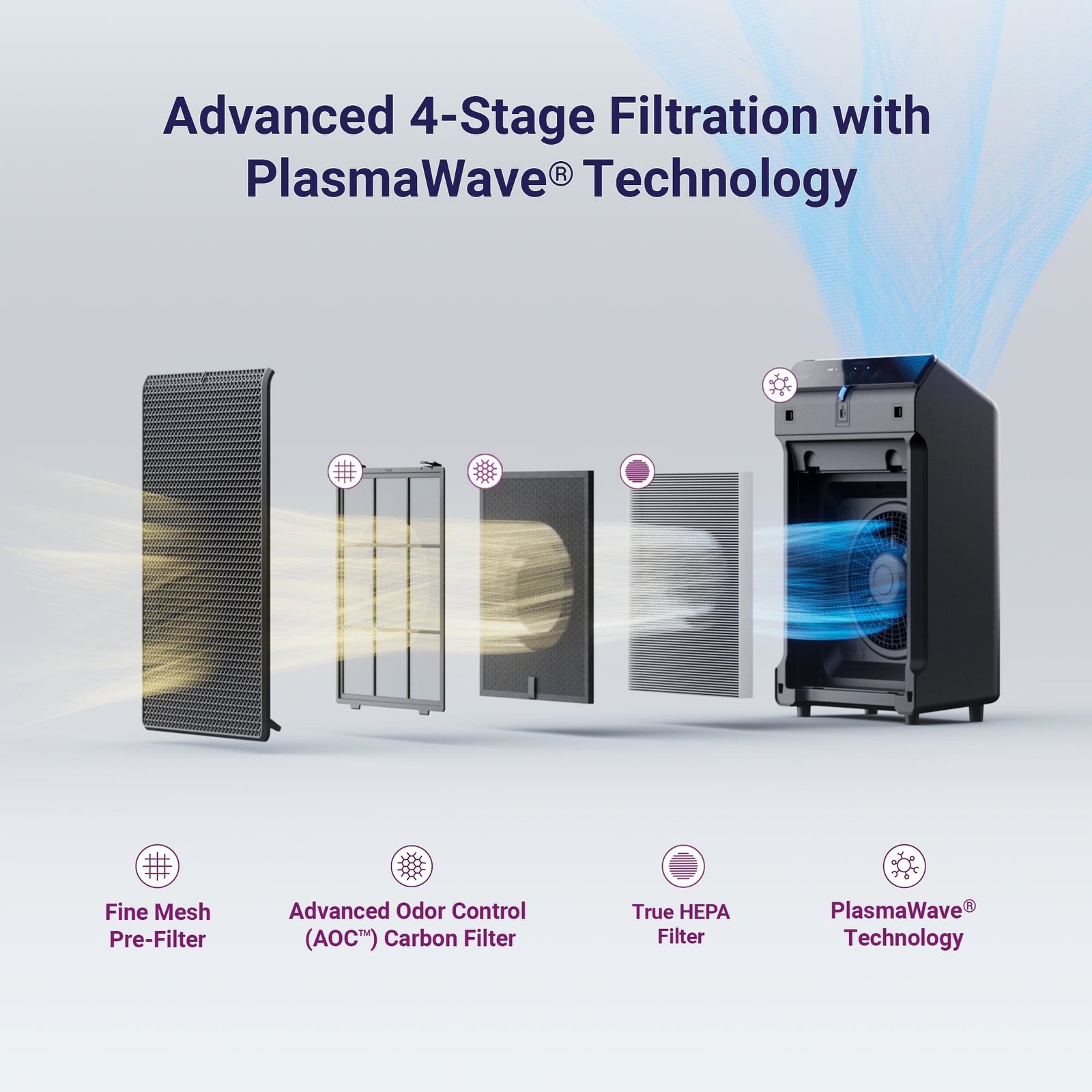
The Coway Airmega Mighty AP-1512HH is one of the brand’s best-known air purifiers. It combines a washable pre-filter, a deodorization filter, a HEPA filter, and a separate bipolar ionizer.
Its practical strengths include:
- Automatic fan-speed adjustment.
- An air-quality indicator.
- An Eco mode.
- A filter replacement indicator.
- A relatively compact design for its performance class.
Coway’s US product information lists a smoke CADR of 233 CFM, dust CADR of 246 CFM, and pollen CADR of 240 CFM. Its AHAM-style room coverage figure is 361 square feet at approximately 4.8 air changes per hour. The manufacturer also lists a noise range of 24–53 dBA.
Independent RTINGS testing measured a PM1.0 CADR of approximately 222 CFM and a maximum-speed recommended room size of about 346 square feet. Its measured noise ranged from 33.5 dBA at the lowest fan speed to 60.3 dBA at the highest setting.
These numbers come from different measurement contexts, so they should not be treated as directly interchangeable.
One important buying consideration: the AP-1512HH is an older generation. Coway has introduced the Mighty2, and buyers should compare the two rather than assuming the original Mighty is the newest version.
Best for: Buyers who want a well-established Coway model with automatic operation and strong particle filtration, particularly when the price is competitive.
2. Coway Airmega Mighty2
The Mighty2 is the newer generation to consider when shopping for a Coway Mighty-style purifier.
Independent RTINGS comparison testing reported a PM1.0 CADR of approximately 237 CFM for the Mighty2, compared with 222 CFM for the original AP-1512HH.
The more notable difference in that testing was low-noise performance. At or below 45 dBA, the Mighty2 delivered approximately 165 CFM, compared with 83 CFM for the older Mighty.
That difference matters because many people prefer to operate an air purifier at a quieter speed while sleeping, working, or watching television.
However, a newer model is not automatically the better purchase for every household. Compare the current selling price, replacement-filter availability, warranty, and exact model specifications before deciding.
Best for: Buyers who want to compare the newer Mighty generation with the original and value stronger filtration at quieter operating levels.
3. Coway Airmega 200M
The Airmega 200M is another popular Coway model. Its filtration arrangement and operating approach are similar to the original Mighty.
It includes a pre-filter, HEPA filtration, deodorization filtration, and a separate ionizer. Its air-quality sensor can automatically adjust the fan speed, while Eco mode can reduce unnecessary operation when air quality remains acceptable.
Independent RTINGS testing measured:
- PM1.0 CADR: approximately 243 CFM.
- Recommended room size at maximum fan speed: approximately 380 square feet.
- Noise at the lowest fan speed: 33.6 dBA.
- Noise at the highest fan speed: 61.3 dBA.
The 200M is a capable particle-filtration option, but it has limitations. It does not provide the full smartphone app control that some connected air purifiers offer, and its higher fan speeds can be noticeable.
Its actual suitability depends on the room size, desired air-change rate, and the speed at which you are comfortable running it.
Best for: Buyers who prefer automatic air-quality adjustment and want a medium-to-large-room purifier without needing smartphone control.
4. Coway Airmega 400
The Airmega 400 is designed for larger spaces and uses two filter assemblies, one on each side of the unit.
Its filtration system combines washable pre-filters, pelletized activated carbon, and HEPA filtration. A built-in particle sensor supports automatic Smart mode operation.
Independent RTINGS testing measured:
- PM1.0 CADR: approximately 368 CFM.
- Recommended room size at maximum fan speed: approximately 575 square feet.
- Noise at the lowest fan speed: 31.6 dBA.
- Noise at the highest fan speed: 60.1 dBA.
The Airmega 400’s higher airflow makes it more appropriate for larger rooms than the Mighty or 200M.
However, there are two important limitations.
First, the standard Airmega 400 does not offer Wi-Fi connectivity or smartphone app control. Second, it uses two replacement filter assemblies, which can increase long-term filter costs.
Its larger footprint should also be considered before purchasing.
Best for: Buyers who need higher airflow for a large living room, primary bedroom, or other spacious area.
Coway Air Purifier Filtration Technology
An air purifier’s performance depends heavily on its filtration system. Coway uses combinations of mechanical filters and, on selected models, additional electronic technology.
Understanding what each component does helps buyers avoid unrealistic expectations.
Pre-Filter
The pre-filter captures larger airborne particles such as:
- Dust.
- Hair.
- Larger pet dander particles.
- Lint and other visible debris.
Many Coway models use washable pre-filters. Cleaning these filters helps prevent larger particles from accumulating and restricting airflow.
Follow the cleaning instructions in the manual for your exact model. Allow a washable filter to dry completely before reinstalling it.
HEPA Filtration
HEPA filtration is one of the most important components in a residential air purifier.
A True HEPA filter meeting the commonly cited US efficiency definition captures at least 99.97% of particles measuring 0.3 microns under specified test conditions.
This filtration can help reduce airborne particles such as:
- Fine dust.
- Pollen.
- Some mold spores.
- Pet dander.
- Certain smoke particles.
Not every filter marketed with HEPA-related terminology has the same certification or performance. Check the exact product specifications rather than assuming every Coway model uses an identical filter.
Activated Carbon Filtration
Activated carbon is used to reduce certain gases and odors through adsorption.
Depending on its design and quantity, it may help reduce:
- Cooking odors.
- Some household odors.
- Certain volatile organic compounds (VOCs).
- Some gaseous pollutants.
Carbon filtration has limitations. Its effectiveness depends on the type and amount of carbon, airflow, contact time, and the specific pollutant.
A thin carbon-coated sheet should not be assumed to provide the same gas-removal capacity as a purifier with a substantial quantity of activated carbon.
Ionizer Technology and Safety
Some Coway models include a separate ionizer. The original AP-1512HH, for example, has an ionizer that can be switched off.
Ionizers release charged particles that interact with airborne particles. However, some ionization technologies can generate ozone as a byproduct.
Ozone can irritate the respiratory system, particularly at elevated concentrations. Buyers who prefer to avoid this technology can leave the ionizer switched off when the model allows it.
Mechanical HEPA filtration does not require an ionizer to capture particles. Check the exact model’s instructions and relevant emissions information before purchasing.
Coway CADR and Room Coverage
CADR stands for Clean Air Delivery Rate. It indicates how quickly an air purifier delivers filtered air for particular particle categories.
In the United States, AHAM testing commonly reports CADR for:
- Smoke.
- Dust.
- Pollen.
A higher CADR generally means the purifier can deliver more clean air per minute under the test conditions.
However, CADR should be considered alongside room size and air changes per hour (ACH).
For example, a purifier may be advertised for a very large room at one air change per hour. That does not mean it will deliver the same cleaning performance at four or five air changes per hour.
Before choosing a Coway model:
- Measure the room’s floor area.
- Estimate the ceiling height.
- Calculate the room volume.
- Decide how many air changes per hour you want.
- Compare the required airflow with the purifier’s CADR.
A useful formula is:
Required CADR (CFM) = Room Volume (cubic feet) × Desired ACH ÷ 60
This helps you avoid buying a purifier that is technically rated for your room but cannot deliver the desired cleaning rate at a comfortable fan speed.
For more details, read our guide to understanding CADR ratings.
Noise Levels and Energy Consumption
Noise is an important part of the ownership experience. An air purifier may have excellent maximum-speed performance, but if it is too loud for everyday use, you may not want to run it at that setting.
The independently measured noise figures below illustrate how operating levels differ between Coway models.
| Model | Lowest measured noise | Highest measured noise |
|---|---|---|
| AP-1512HH Mighty | 33.5 dBA | 60.3 dBA |
| Airmega 200M | 33.6 dBA | 61.3 dBA |
| Airmega 400 | 31.6 dBA | 60.1 dBA |
These are RTINGS measurements, not guaranteed figures for every unit or operating environment.
For bedrooms and home offices, consider the CADR available at a quieter fan speed rather than focusing only on maximum CADR.
Energy use also depends on fan speed, operating hours, and model design. Check the official specifications and ENERGY STAR information for the exact model when comparing electricity costs.
Coway Replacement Filters and Maintenance
Replacement filters are an important part of the total cost of owning an air purifier.
Coway sells model-specific replacement filters through its official US store. Before ordering, check the model number and filter compatibility carefully.
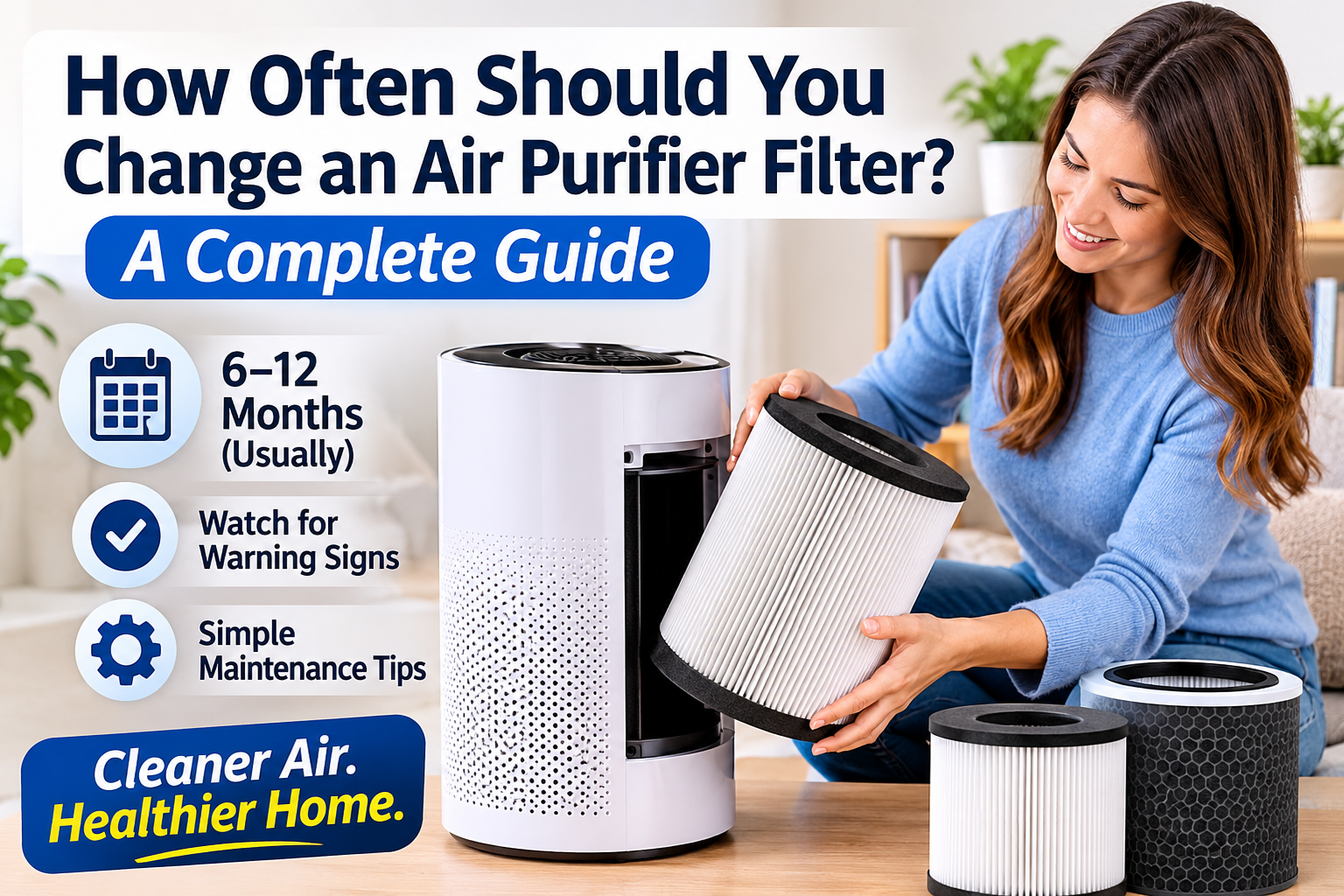
The original Mighty AP-1512HH, for example, uses a washable pre-filter, a deodorization filter, and a HEPA filter. Coway lists an approximate six-month life for its deodorization filter and one year for its HEPA filter.
Actual replacement intervals can vary with air quality, operating hours, and usage conditions.
How to Maintain a Coway Air Purifier
A basic maintenance routine may include:
- Inspect the pre-filter regularly.
- Clean washable pre-filters according to the manual.
- Allow washed filters to dry completely.
- Replace disposable filters at the model-specific recommended interval.
- Keep the air inlet and outlet free of obstructions.
- Reset the filter indicator after replacing the relevant filter, following the manual.
Do not wash a disposable HEPA filter unless the manufacturer explicitly identifies it as washable.
Genuine vs. Third-Party Filters
Third-party filters may cost less, but compatibility and filtration performance can vary.
Before buying an aftermarket replacement, check:
- Exact model compatibility.
- Dimensions and fit.
- Filter construction.
- Sealing around the filter frame.
- Available performance documentation.
- Seller reputation and return policy.
A poorly fitting filter can allow air to bypass the filtration material, reducing overall performance.
For buyers who prefer predictable compatibility, genuine Coway replacement filters are the safer starting point.
Smart Features and Ease of Use
Coway’s feature set varies across models.
The original Mighty and Airmega 200M offer automatic fan adjustment based on their built-in particle sensors, along with an Eco mode.
The Airmega 400 provides automatic Smart mode operation, but the standard model does not offer full smartphone app connectivity.
This distinction matters because some competing air purifiers provide app-based scheduling, remote controls, and additional air-quality information.
If you want a straightforward purifier with physical controls and automatic operation, Coway’s traditional models may be sufficient.
If smartphone control is essential, compare the connectivity features of the exact Coway model with alternatives before purchasing.
Pros and Cons of Coway Air Purifiers
Pros
- Strong particle-filtration performance in independently tested models.
- Multiple Airmega options for different room sizes.
- Washable pre-filters on several models.
- Automatic fan-speed adjustment on selected models.
- Established replacement-filter ecosystem.
- Useful Eco and automatic operating modes on compatible models.
- Large-room options such as the Airmega 400.
Cons
- Some models lack smartphone app connectivity.
- Higher fan speeds can be noticeably loud.
- Replacement filters add ongoing ownership costs.
- The Airmega 400 uses two filter assemblies.
- Ionizer technology may not appeal to buyers who prefer mechanical filtration alone.
- Model generations and specifications can be confusing.
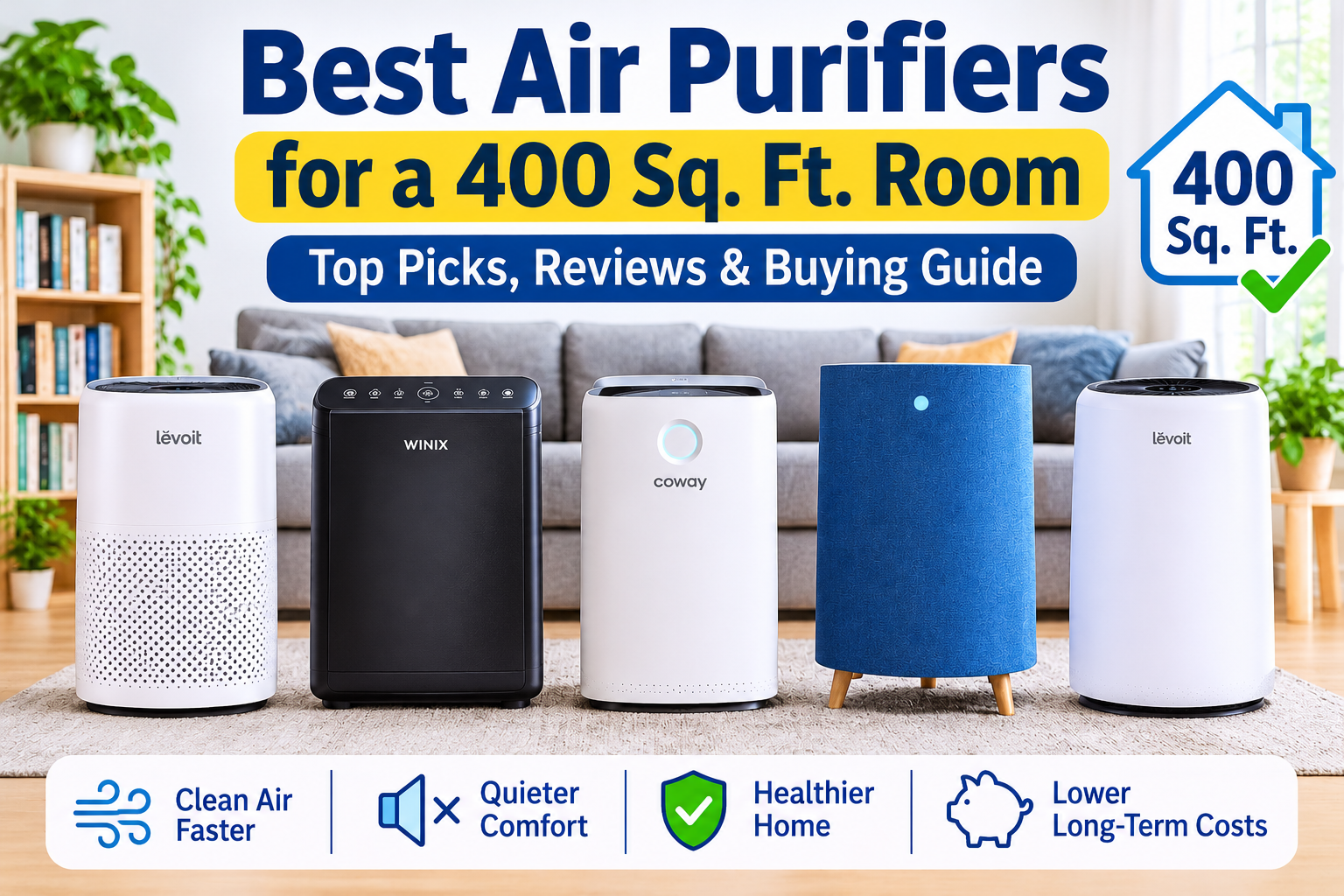
Coway vs. Levoit: Which Brand Is Better?
Coway and Levoit are both worth considering, but neither brand is automatically the best choice for every household.
The better option depends on the individual model, room size, filtration requirements, operating noise, replacement-filter costs, and available features.
| Buying factor | Coway | Levoit |
|---|---|---|
| Product range | Airmega models across room sizes | Broad range of Core and Vital models |
| Automatic operation | Available on selected models | Available on selected models |
| App connectivity | Model-dependent | Available on selected smart models |
| Filter options | Model-specific HEPA and carbon combinations | Model-specific filter combinations |
| Large-room choices | Includes models such as Airmega 400 | Includes larger models such as EverestAir |
| Maintenance | Model-specific replacement filters | Model-specific replacement filters |
Coway may appeal to buyers who value its Airmega designs, automatic operation, and independently measured particle-filtration performance.
Levoit may appeal to buyers who want a wider selection of form factors and smart features, depending on the model.
For a fair comparison, match similar room coverage and air-change requirements. Compare CADR, noise at the speed you will actually use, and the cost of replacement filters over several years.
Also check the exact filtration claims. Do not assume every model from either brand has the same HEPA classification or gas-removal capability.
Who Should Buy a Coway Air Purifier?
A Coway air purifier may be a good choice if:
- You want a dedicated mechanical particle-filtration system.
- You need a model suited to a medium or large room.
- You value automatic fan-speed adjustment.
- You prefer physical controls and relatively straightforward operation.
- You are comfortable replacing filters periodically.
- You can find a model that meets your room’s CADR requirements.
The Airmega Mighty models are worth considering for medium-sized spaces, while the Airmega 400 is more appropriate when higher airflow is required.
Who Should Consider Other Brands?
Coway may not be the best fit if:
- You require smartphone app control but the model you are considering does not support it.
- You want very quiet operation at high airflow.
- You need substantial gas or VOC filtration and the selected model has only a limited carbon filter.
- Replacement-filter costs are a major concern.
- You need a particularly compact purifier for a small desk or bedside table.
In these cases, compare other brands and models using independent testing and verified specifications.
Is Coway Worth Buying? Our Verdict
Coway is a strong brand to include on your air purifier shortlist, particularly if particle filtration, automatic operation, and established Airmega designs are important to you.
The original Airmega Mighty AP-1512HH remains a recognizable option, but buyers should also evaluate the newer Mighty2. The Airmega 200M offers a similar approach to automatic operation, while the Airmega 400 provides higher airflow for larger spaces.
There is no single Coway model that is ideal for every room.
Our recommendation is to choose based on the CADR you need at a noise level you can tolerate, not simply the largest advertised room-size figure. Also calculate the long-term cost of replacement filters before making a purchase.
Final verdict: Coway air purifiers are worth considering for buyers who want capable particle filtration and practical automatic operation. The best value depends on the exact model, current price, filter availability, and room requirements.
Frequently Asked Questions
1. Is Coway a good air purifier brand?
Coway is a recognized air purifier manufacturer with several models that perform well in independent particle-filtration testing. The right choice still depends on the model’s CADR, noise, features, and filter costs.
2. Which Coway air purifier is best for a bedroom?
The Mighty and 200M may suit many medium-sized bedrooms, while the Mighty2 is worth comparing if quieter operation with stronger airflow is important. Check low-speed CADR and noise rather than relying only on maximum room coverage.
3. Is the Coway Airmega Mighty worth buying?
The original AP-1512HH remains a capable purifier, but it is an older generation. Compare its current price and filter costs with the newer Mighty2 before buying.
4. Does Coway use True HEPA filters?
The original AP-1512HH is listed with a HEPA filter, and Coway publishes model-specific filtration information. Always check the exact model’s official documentation before assuming every Airmega purifier uses the same filter specification.
5. How often should Coway filters be replaced?
Replacement intervals depend on the model and filter type. For the original AP-1512HH, Coway lists approximately six months for the deodorization filter and one year for the HEPA filter. Follow the manual for your specific model.
6. Are Coway air purifiers quiet?
Coway models can be relatively quiet at lower fan speeds, but maximum-speed operation can be noticeably louder. Compare independently measured noise and CADR at the fan speed you expect to use.
7. Does Coway’s ionizer produce ozone?
Ionization technologies can generate ozone as a byproduct. The original AP-1512HH has a separate ionizer that can be switched off. Check the exact model’s documentation and emissions information if ozone avoidance is a priority.
8. Is Coway better than Levoit?
Neither brand is universally better. Compare specific models using CADR, room coverage at the same ACH, noise, filtration design, replacement-filter costs, and smart features.
Conclusion
Coway offers a range of air purifiers for different room sizes and household needs. Its Airmega models combine particle filtration with practical features such as automatic operation and washable pre-filters.
The original Mighty, Mighty2, 200M, and 400 each have different strengths. Buyers should look beyond marketing claims and compare independently measured performance, operating noise, and ongoing maintenance costs.
A well-sized purifier that runs consistently at a comfortable speed is generally a better choice than an oversized machine that is too noisy to use regularly.