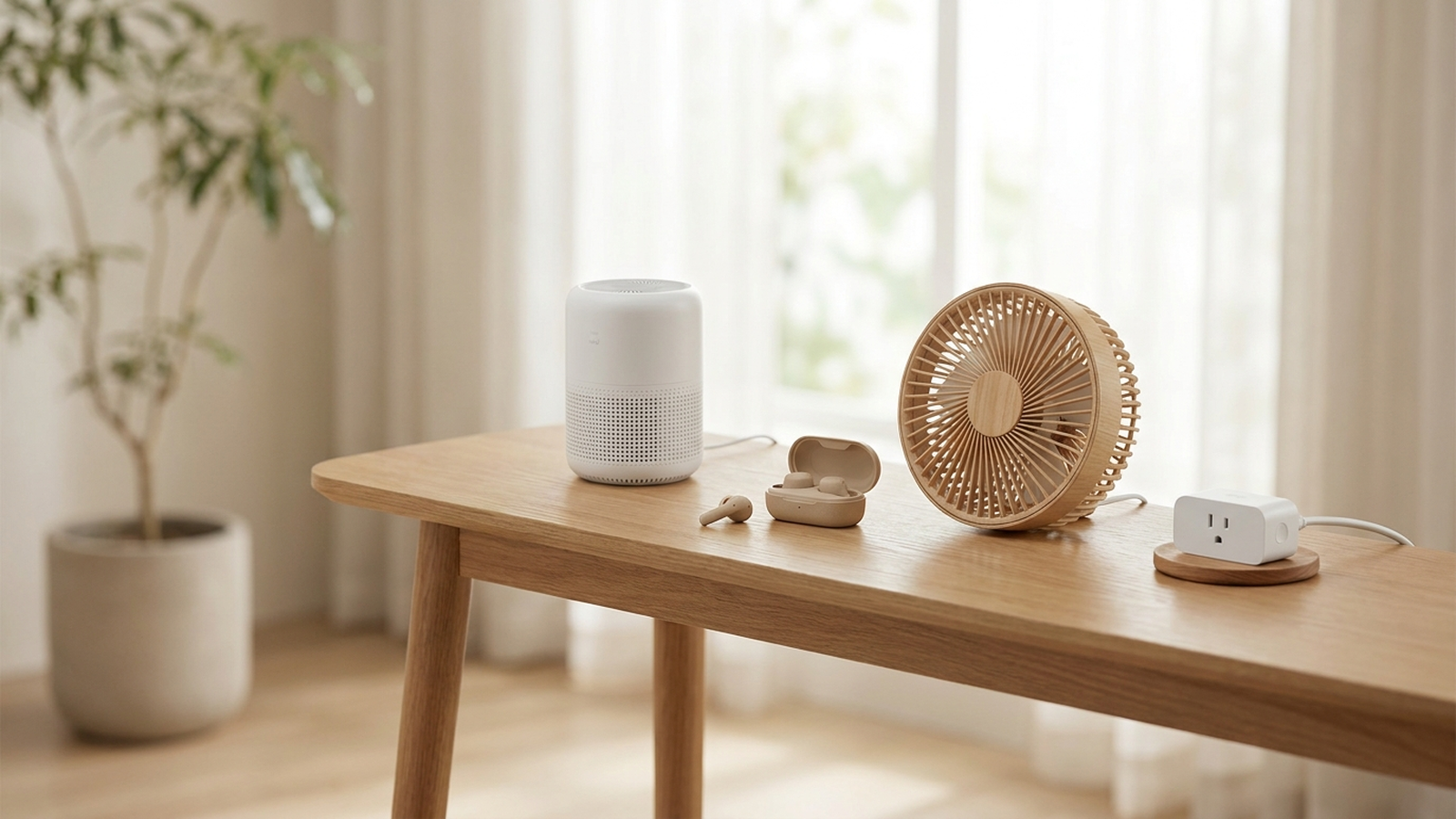
What Is CADR in Air Purifiers? Understanding Clean Air Delivery Rate
By Kamal Kishor Raika
When shopping for an air purifier, you will often come across a specification called CADR. Some models advertise a CADR of 150 CFM, while others offer 250 CFM, 350 CFM, or even higher ratings.
But what do these numbers actually mean? And how can you tell which CADR is suitable for your room?
CADR stands for Clean Air Delivery Rate. It measures how quickly an air cleaner delivers filtered air for specific airborne particle categories. In simple terms, CADR helps you understand how much clean air an air purifier can provide and whether its performance is appropriate for your room size.
Understanding CADR can help you avoid buying an undersized purifier that struggles to clean your space or spending extra money on capacity you may not need.
In this guide, we will explain what CADR means, how its three ratings work, how to choose the right CADR for your room, and what this measurement does not tell you.
What Does CADR Stand For?
CADR stands for Clean Air Delivery Rate.
It is a performance measurement used for portable air cleaners. In the United States, CADR is commonly expressed in CFM (Cubic Feet per Minute).
CFM describes the volume of air moving through a system in one minute. CADR goes a step further by accounting for how effectively an air cleaner removes specific airborne particles.
For example, an air purifier with a smoke CADR of 200 CFM delivers clean air for smoke particles at a higher rate than a comparable purifier with a smoke CADR of 100 CFM, under the relevant test conditions.
A higher CADR generally indicates a greater clean air delivery rate.
However, CADR should not be confused with filter efficiency. A filter’s efficiency describes how effectively it captures particles passing through it, while CADR reflects the amount of clean air delivered over time.
How Does CADR Work?
An air purifier uses a fan to pull room air through its filtration system.
As air passes through the filter, some airborne particles are captured. The treated air then returns to the room.
CADR combines the purifier’s airflow and particle-removal performance into one measurement.
Consider two air purifiers:
- Purifier A has a smoke CADR of 100 CFM.
- Purifier B has a smoke CADR of 200 CFM.
Under comparable test conditions, Purifier B delivers approximately twice as much clean air for smoke particles per minute.
This does not mean it will always make every room clean twice as fast. Actual performance depends on room size, airflow circulation, placement, operating speed, and ongoing pollution sources.
CADR is useful because it helps consumers compare the particle-cleaning performance of different air cleaners using a standardized measurement.
The Three Types of CADR Ratings
CADR testing commonly provides three separate ratings: smoke, dust, and pollen.
Each rating represents performance against a different particle category.
1. Smoke CADR
Smoke CADR measures an air cleaner’s ability to reduce small airborne particles associated with tobacco smoke.
It is particularly useful when evaluating air purifiers for environments affected by:
- Cigarette smoke particles
- Wildfire smoke particles
- Fine airborne particulate matter
- Other small combustion-related particles
If your primary concern is fine particle pollution, pay close attention to the smoke CADR rating.
The smoke rating is also useful when comparing air purifiers for areas affected by seasonal wildfire smoke. However, it does not indicate how effectively a purifier removes every gas associated with smoke.
2. Dust CADR
Dust CADR measures the reduction of airborne dust particles under standardized testing conditions.
Dust is a common indoor pollutant that can enter homes through open doors, windows, clothing, and everyday activities.
A purifier with an appropriate dust CADR can help reduce airborne dust particles.
It is important to remember that an air purifier cannot prevent all dust from settling on furniture, floors, or other surfaces. Regular household cleaning is still necessary.
3. Pollen CADR
Pollen CADR measures performance against larger airborne pollen particles.
This rating can be useful when evaluating an air purifier for seasonal pollen concerns.
A suitable purifier may help reduce airborne pollen circulating indoors, particularly when windows and doors are managed to limit additional outdoor pollen entering the room.
CADR Rating Comparison
| CADR Type | Measures Performance Against | Common Concern |
|---|---|---|
| Smoke CADR | Small smoke particles | Wildfire and tobacco smoke particles |
| Dust CADR | Dust particles | Household airborne dust |
| Pollen CADR | Larger pollen particles | Seasonal pollen |
These ratings help you understand particle-removal performance. They do not provide a complete measurement of gas or chemical removal.
How to Choose CADR Based on Room Size
Room size is one of the most important factors when selecting an air purifier.
A purifier with a high-quality filter may still perform poorly in a large room if its airflow capacity is too low.
The Association of Home Appliance Manufacturers (AHAM) provides a commonly used guideline: an air cleaner’s smoke CADR should be at least two-thirds of the room’s floor area when the room has a standard 8-foot ceiling.
For example, if your room measures 150 square feet:
150 × ⅔ = 100
You would generally look for a smoke CADR of at least 100 CFM under this guideline.
For rooms affected by wildfire smoke, AHAM recommends choosing a smoke CADR at least equal to the room’s floor area.
These are practical sizing guidelines, not guarantees of a particular air-cleaning result.
CADR Room Size Chart
The following chart uses the general AHAM two-thirds guideline for rooms with approximately 8-foot ceilings.
| Room Area | Approximate Minimum Smoke CADR |
|---|---|
| 100 sq. ft. | 67 CFM |
| 150 sq. ft. | 100 CFM |
| 200 sq. ft. | 134 CFM |
| 250 sq. ft. | 167 CFM |
| 300 sq. ft. | 200 CFM |
| 400 sq. ft. | 267 CFM |
| 500 sq. ft. | 334 CFM |
| 600 sq. ft. | 400 CFM |
| 800 sq. ft. | 534 CFM |
| 1,000 sq. ft. | 667 CFM |
Important: These are approximate calculations based on the general two-thirds guideline. Always check the manufacturer’s stated room coverage, the CADR rating, and the testing conditions before purchasing.
For wildfire smoke, a smoke CADR approximately equal to the room’s floor area is a useful target under AHAM guidance.
How to Calculate the Required CADR
You can estimate the minimum smoke CADR for a room using a simple formula.
General AHAM guideline:
Required Smoke CADR = Room Area × ⅔
Let’s understand this with practical examples.
Example 1: A 120 Sq. Ft. Bedroom
Suppose your bedroom measures:
- Length: 10 feet
- Width: 12 feet
- Room Area: 120 sq. ft.
Calculation:
120 × ⅔ = 80 CFM
A purifier with a smoke CADR of approximately 80 CFM meets the basic two-thirds guideline for this room.
Example 2: A 200 Sq. Ft. Room
Suppose your room measures:
- Length: 10 feet
- Width: 20 feet
- Room Area: 200 sq. ft.
Calculation:
200 × ⅔ = 133.3 CFM
You would look for a smoke CADR of approximately 134 CFM or higher.
Example 3: A 300 Sq. Ft. Living Room
Suppose your living room measures:
- Length: 15 feet
- Width: 20 feet
- Room Area: 300 sq. ft.
Calculation:
300 × ⅔ = 200 CFM
A purifier with a smoke CADR of at least 200 CFM would meet the general sizing guideline.
For wildfire smoke, a target of approximately 300 CFM would be more appropriate under the room-area-equals-smoke-CADR recommendation.
CADR vs. ACH: What’s the Difference?
CADR and ACH are closely related, but they measure different aspects of air cleaning.
CADR tells you how much clean air an air purifier delivers per minute.
ACH stands for Air Changes per Hour. It describes how many equivalent room volumes of clean air are delivered in an hour.
| Feature | CADR | ACH |
|---|---|---|
| Full Form | Clean Air Delivery Rate | Air Changes per Hour |
| Measurement | CFM | Changes per hour |
| Main Purpose | Measures clean air delivery | Describes equivalent air-cleaning rate |
| Common Use | Comparing purifier performance | Understanding room air cleaning |
| Depends On | Airflow and particle removal | Clean air delivery and room volume |
A purifier’s CADR can be used to estimate its equivalent air changes per hour when the room volume is known.
A useful formula is:
ACH = (CADR × 60) ÷ Room Volume
Here, CADR is in CFM and room volume is in cubic feet.
For example, consider a 200-square-foot room with an 8-foot ceiling.
Room Volume = 200 × 8 = 1,600 cubic feet.
If the purifier has a smoke CADR of 200 CFM:
ACH = (200 × 60) ÷ 1,600
ACH = 7.5
This is an estimated equivalent clean-air delivery rate of 7.5 air changes per hour under the stated conditions.
For a deeper explanation, read our guide: What Is ACH (Air Changes per Hour)?
Is a Higher CADR Always Better?
A higher CADR generally means more clean air delivery, but the highest number is not automatically the best purchase for every household.
A purifier should match your room size, pollution concerns, and everyday operating preferences.
Consider these factors before choosing a high-CADR model.
1. Room Size
A small bedroom does not necessarily need the same CADR as a large living room.
Choose a purifier that is appropriately sized for the space where you plan to use it.
2. Noise Levels
Air purifiers often produce more noise at higher fan speeds.
A model may advertise an impressive CADR at maximum speed but become too loud for comfortable everyday use.
Check noise specifications at the fan speeds you expect to use regularly.
3. Energy Consumption
A purifier operating continuously can contribute to household electricity consumption.
Compare energy information and consider whether the device can deliver suitable performance at a quieter, lower operating speed.
4. Filter Replacement Costs
A higher-performance purifier may use larger or more expensive replacement filters.
Before buying, check:
- Replacement filter prices
- Recommended replacement intervals
- Availability of genuine filters
- Long-term maintenance costs
5. Actual Performance at Your Preferred Speed
Always examine the available performance information carefully.
A high maximum CADR does not necessarily mean the purifier delivers the same performance on its lowest or quietest setting.
What CADR Does Not Tell You
CADR is useful, but it does not describe every aspect of air purification.
Understanding its limitations is essential when comparing products.
1. CADR Does Not Measure Every Gas or VOC
CADR is primarily a particle-removal measurement.
It does not establish how effectively an air purifier removes gases, chemical vapors, or volatile organic compounds.
For these pollutants, look for suitable gas-phase filtration media, such as activated carbon or other specialized sorbents.
The amount and type of filter media matter.
2. CADR Does Not Prove HEPA Certification
A high CADR does not automatically mean that an air purifier contains a true HEPA filter.
CADR and HEPA filter efficiency are different measurements.
Check the manufacturer’s filter specifications and supporting documentation separately.
3. CADR Does Not Guarantee Real-World Performance in Every Room
Standardized testing provides a useful basis for comparison, but real homes have different layouts, ceiling heights, furniture arrangements, and pollution sources.
Room conditions can affect how effectively clean air circulates.
4. CADR Does Not Measure Noise or Electricity Use
Two air purifiers may have similar CADR ratings but very different noise levels and operating costs.
Compare these specifications separately.
5. CADR Does Not Replace Proper Ventilation
An air purifier generally filters existing indoor air rather than bringing fresh outdoor air into a room.
Ventilation, source control, and filtration serve different purposes and can work together to improve indoor air quality.
What Is AHAM Verifide Certification?
AHAM stands for the Association of Home Appliance Manufacturers.
AHAM Verifide is a voluntary certification program that helps consumers compare air cleaner performance using standardized testing.
When an air purifier is AHAM Verifide, its listed CADR values have been tested under the applicable program requirements.
This can make product comparisons more meaningful than relying only on marketing claims.
Before purchasing, you can check the AHAM directory to see whether a particular air cleaner has verified ratings.
Look for the specific model number and compare its smoke, dust, and pollen CADR values.
Do not assume that every product sold by a particular brand has AHAM verification. Check the exact model.
Frequently Asked Questions
1. What is CADR in an air purifier?
CADR stands for Clean Air Delivery Rate. It measures how quickly an air cleaner delivers filtered air for specific airborne particle categories, commonly smoke, dust, and pollen.
2. What is a good CADR for an air purifier?
A good CADR depends on your room size and air-cleaning requirements. Under the general AHAM guideline, smoke CADR should be at least two-thirds of the room’s floor area for a standard 8-foot ceiling.
3. Is a higher CADR better?
Generally, yes. A higher CADR indicates greater clean air delivery for the tested particle category. However, noise, energy use, filter costs, and room size should also influence your decision.
4. What does smoke CADR mean?
Smoke CADR measures an air cleaner’s performance in reducing small airborne smoke particles under standardized testing conditions. It is especially useful when evaluating performance against fine particle pollution.
5. What is the difference between CADR and CFM?
CFM measures airflow volume per minute. CADR measures the delivery of clean air per minute for a particular particle category, accounting for particle-removal performance.
6. Can I use CADR to compare all air purifiers?
CADR is a useful comparison metric for particle removal when ratings are obtained under comparable testing conditions. It does not fully measure gas removal, noise, energy consumption, or every aspect of real-world performance.
7. What CADR do I need for a 200 sq. ft. room?
Using the general AHAM two-thirds guideline, a 200-square-foot room would need a smoke CADR of approximately 134 CFM or higher. For wildfire smoke, a target of approximately 200 CFM is a useful guideline.
8. Does CADR measure HEPA filter efficiency?
No. CADR measures clean air delivery for specific particle categories. HEPA efficiency describes how effectively a filter captures particles under specified test conditions.
9. What is AHAM Verifide CADR?
It refers to CADR ratings verified through AHAM’s voluntary air cleaner certification program using standardized testing procedures.
10. Does a high CADR remove odors and VOCs?
Not necessarily. CADR primarily measures particle removal. Reducing certain odors and VOCs requires suitable activated carbon or other gas-phase filtration media.
Final Thoughts
CADR is one of the most useful specifications to understand when buying an air purifier.
It helps you compare how quickly different models deliver clean air and whether their particle-removal performance is appropriate for your room size.
However, choosing an air purifier should involve more than looking at one number.
Check smoke, dust, and pollen CADR ratings, room coverage, filter specifications, noise levels, energy consumption, and replacement filter costs.
For most buyers, the best choice is not necessarily the purifier with the highest advertised CADR. It is the model that provides suitable clean air delivery for the room while remaining practical to operate and maintain.
At BestAirPurifierOnline.com, we believe understanding product specifications is the first step toward making smarter indoor air quality decisions.
SEO Publishing Details
SEO Title: What Is CADR in Air Purifiers? A Complete Guide
Meta Description: Learn what CADR means in air purifiers, understand smoke, dust and pollen ratings, and find the right CADR for your room size with practical examples.
URL Slug: what-is-cadr-in-air-purifiers
Focus Keyword: what is CADR in air purifiers
Suggested Tags: CADR, Air Purifier Education, Clean Air Delivery Rate, AHAM, Air Purifier Room Size, Indoor Air Quality
Featured Image File Name: what-is-cadr-in-air-purifiers.webp
Featured Image Alt Text: Educational illustration explaining air purifier CADR ratings and clean air delivery for different room sizes.
Author: Kamal Kishor Raika