How Do Air Purifiers Work? A Complete Beginner’s Guide
By Kamal Kishor Raika
Have you ever wondered how an air purifier actually cleans the air inside your home? You switch it on, hear the fan running, and expect cleaner air—but what happens inside the machine?
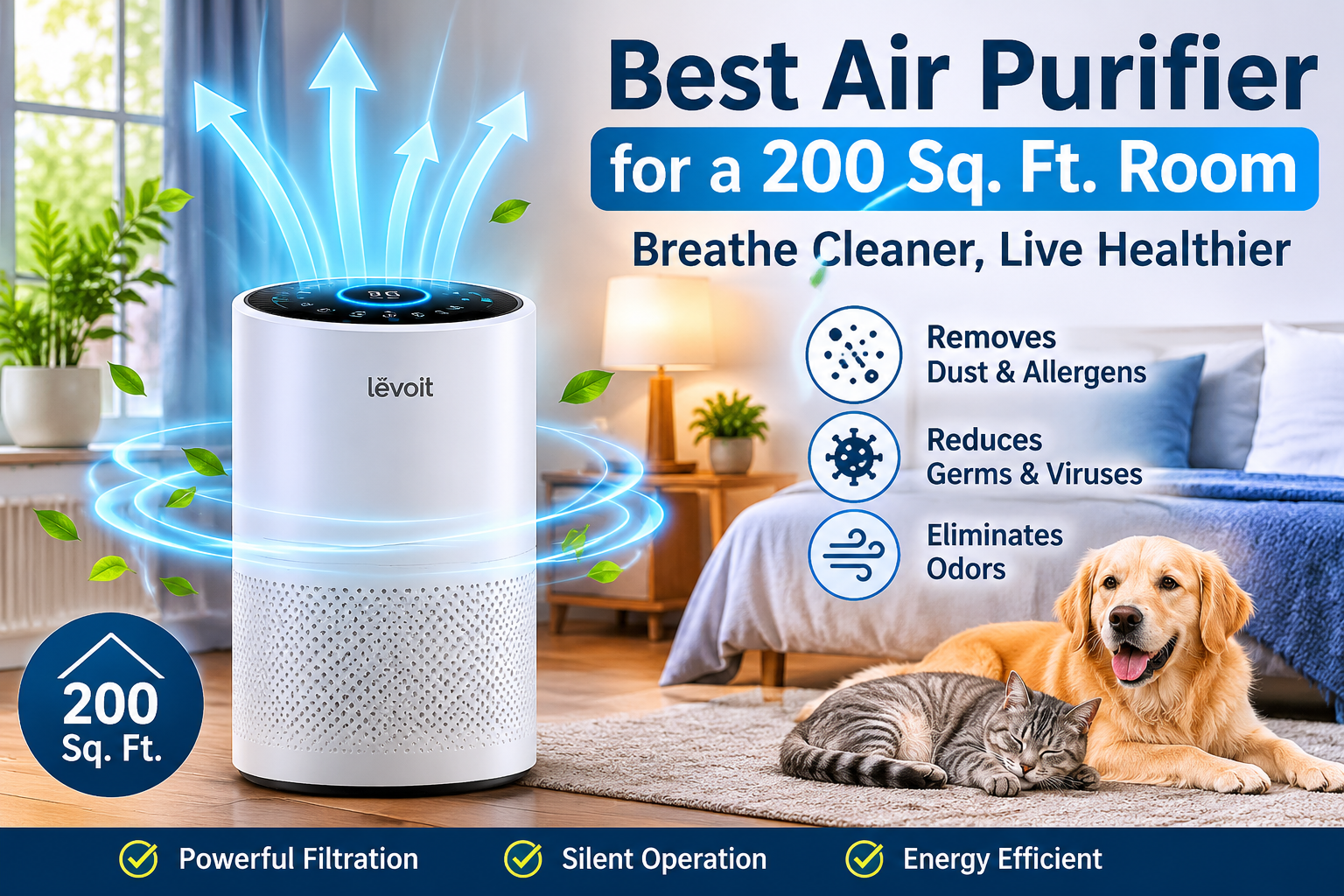
An air purifier works by drawing indoor air through one or more filtration systems, capturing or reducing certain airborne pollutants, and releasing treated air back into the room. Depending on its technology, it may help remove particles such as dust, pollen, pet dander, and smoke, while specialized filters can also reduce certain odors and gases.
However, not every air purifier works in the same way, and no single device removes every type of indoor air pollutant.
In this beginner-friendly guide, we will explain how air purifiers work, how HEPA and activated carbon filters clean the air, what these devices can and cannot remove, and which performance factors matter when choosing one.
What Is an Air Purifier?
An air purifier is an electrical appliance designed to reduce certain pollutants from indoor air.
It usually contains a fan, one or more filters, an air intake, and an outlet. The fan pulls air into the machine, moves it through the filtration system, and pushes the treated air back into the room.
Unlike an air conditioner, which primarily controls indoor temperature, an air purifier focuses on airborne particles and, when equipped with suitable media, certain gases and odors.
Common indoor pollutants include:
- Dust and fine particles
- Pollen
- Pet dander
- Mold spores
- Smoke particles
- Certain household odors
- Some volatile organic compounds (VOCs)
The pollutants an air purifier can reduce depend on its filter design and overall performance.
How Do Air Purifiers Work?
Most mechanical air purifiers operate through a continuous air circulation and filtration process.
The basic working principle is simple:
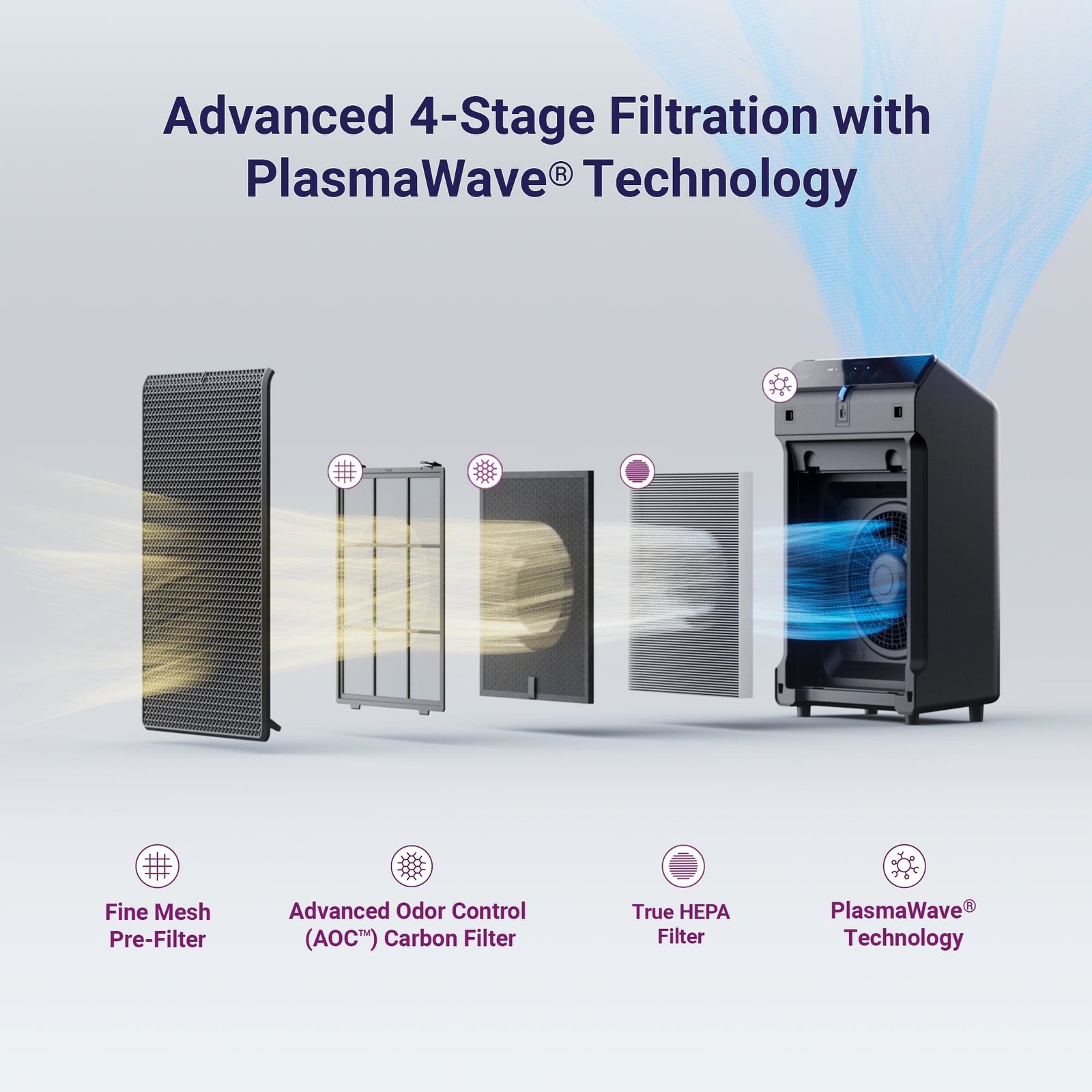
- The fan draws room air into the purifier.
- Air passes through a pre-filter, if included.
- A main filter, often a HEPA filter, captures airborne particles.
- An activated carbon filter may adsorb certain gases and odors.
- The machine releases treated air back into the room.
This process repeats while the purifier operates.
Over time, the purifier can process the same room air multiple times. This helps reduce the concentration of pollutants that pass through its filtration system.
It is important to understand that an air purifier does not instantly clean every corner of a room. Its real-world performance depends on airflow, room size, filter efficiency, placement, operating speed, and the amount of pollution being generated.
The Air Purification Process Step by Step
Let’s look at what happens inside a typical filter-based air purifier.
1. Air Intake
The first step is drawing indoor air into the machine.
Most air purifiers use an electric fan to pull air through intake openings. These openings may be located on the sides, front, or bottom of the appliance, depending on its design.
The fan creates airflow that carries airborne particles into the filtration system.
2. Pre-Filter: Capturing Larger Particles
Many air purifiers include a pre-filter as the first filtration stage.
Its job is to capture relatively large particles, such as:
- Hair
- Larger dust particles
- Pet fur
- Lint
- Visible debris
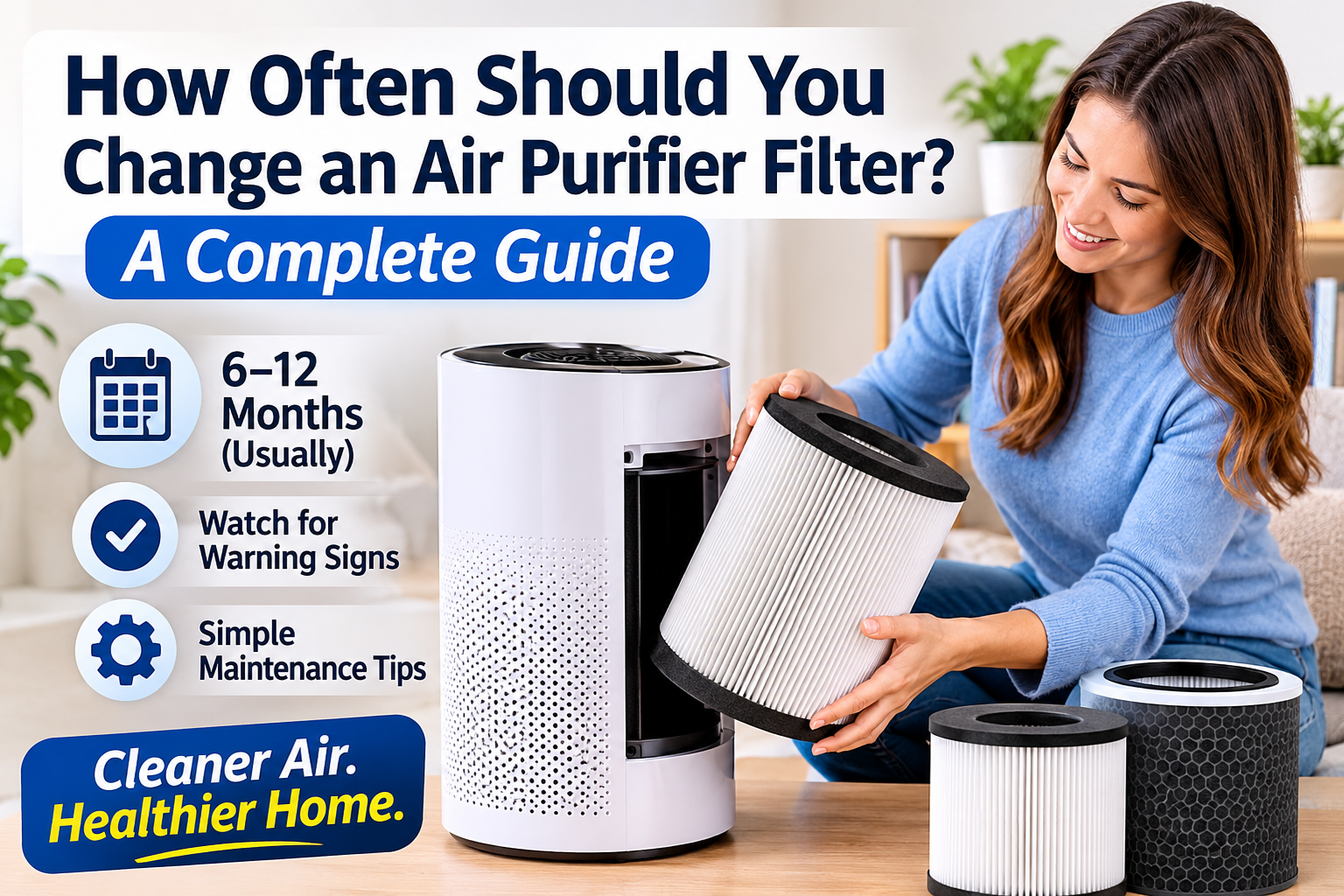
A pre-filter helps protect the main filter from collecting larger debris too quickly.
Some pre-filters are washable or reusable, but this depends on the model. Always follow the manufacturer’s cleaning instructions.
3. HEPA Filter: Capturing Fine Particles
The HEPA filter is one of the most important components in many residential air purifiers.
HEPA stands for High-Efficiency Particulate Air.
A true HEPA filter is designed to capture at least 99.97% of particles measuring 0.3 microns under specified test conditions.
It captures particles through several physical mechanisms, including:
- Interception: Particles follow airflow and come close enough to touch filter fibers.
- Impaction: Larger particles cannot easily follow changes in airflow and collide with fibers.
- Diffusion: Very small particles move irregularly and have a greater chance of contacting filter fibers.
The 0.3-micron measurement is important because it is near the most penetrating particle size for many HEPA filter designs. It does not mean that particles larger or smaller than 0.3 microns automatically pass through.
HEPA filters are commonly used to reduce airborne particles such as pollen, dust, pet dander, and smoke particles.
However, a HEPA filter is designed for particles, not every gas or chemical vapor.
4. Activated Carbon Filter: Reducing Certain Odors and Gases
An activated carbon filter serves a different purpose from a HEPA filter.
It contains carbon material with a highly porous structure. This provides a large surface area where certain gas molecules can attach through a process called adsorption.
Activated carbon may help reduce:
- Cooking odors
- Smoke odors
- Some household smells
- Certain volatile organic compounds (VOCs)
Its performance depends on several factors, including the amount and type of carbon, filter design, airflow, and the specific gas being targeted.
A thin carbon-coated sheet may have limited capacity compared with a purifier containing a substantial amount of activated carbon.
Activated carbon also does not remove every gas. Some pollutants require specialized gas-phase filtration media.
5. Clean Air Output
After passing through the filtration stages, treated air leaves the purifier through its outlet.
The fan circulates this air back into the room, helping the purifier process more indoor air over time.
The cycle continues as long as the purifier operates.
Types of Air Purifier Technologies
Not all air purifiers use the same technology. Understanding the differences can help you choose a suitable device.
| Technology | Primary Function | Important Limitation |
|---|---|---|
| HEPA filtration | Captures airborne particles | Does not remove most gases |
| Activated carbon | Adsorbs certain gases and odors | Capacity varies by carbon quantity and type |
| Pre-filter | Captures larger particles | Does not replace HEPA filtration |
| Electrostatic precipitation | Uses electrical charges to collect particles | Performance and ozone emissions vary |
| Ionization | Charges airborne particles | Some devices may generate ozone |
| UV-C technology | Uses ultraviolet light to inactivate certain microorganisms | Effectiveness depends on exposure and design |
Mechanical HEPA Filtration
Mechanical filtration is a widely used approach in residential air purifiers.
Air passes through a physical filter that captures particles. Because the process relies on filtration rather than intentionally releasing ions or ozone, a properly designed mechanical purifier can be a practical choice for reducing airborne particles.
Activated Carbon Filtration
Activated carbon is especially useful when odor and certain gas reduction are important.
It is often combined with a HEPA filter so the purifier can address both particles and selected gaseous pollutants.
Electrostatic and Ionizing Technology
Some air cleaners use electrical charges to collect or influence airborne particles.
These technologies differ significantly in design and performance. Certain devices can produce ozone, which can irritate the lungs.
Before purchasing an ionizer or electrostatic air cleaner, check its ozone-emission information and relevant safety certifications.
UV-C Air Purification
Some air purifiers include ultraviolet-C light as an additional feature.
UV-C can inactivate certain microorganisms under appropriate conditions. However, effectiveness depends on factors such as exposure time, light intensity, distance, and device design.
A UV-C feature should not automatically be treated as a replacement for effective particle filtration.
What Does an Air Purifier Remove?
An air purifier can reduce different pollutants depending on the technology and filters it uses.
| Pollutant | Suitable Technology | What to Know |
|---|---|---|
| Dust | HEPA filtration | Captures airborne dust particles |
| Pollen | HEPA filtration | Helps reduce airborne pollen |
| Pet dander | HEPA filtration | Captures airborne dander |
| Smoke particles | HEPA filtration | Helps capture fine particles |
| Mold spores | HEPA filtration | Captures airborne spores, not the mold source |
| Certain odors | Activated carbon | Depends on carbon capacity |
| Certain VOCs | Activated carbon or specialized media | Not every VOC is removed equally |
| Some microorganisms | Suitable filtration or validated UV-C systems | Performance depends on the specific device |
An important distinction: capturing airborne mold spores does not solve a moisture problem or remove mold growing on walls, ceilings, or furniture.
Similarly, reducing smoke particles does not necessarily eliminate all gases associated with smoke.
What Can an Air Purifier Not Remove?
Air purifiers are useful indoor air quality tools, but they have limitations.
1. They Cannot Fix Every Indoor Air Quality Problem
An air purifier cannot replace proper ventilation, source control, or moisture management.
For example, if cooking smoke is continuously generated, the best approach may include using a kitchen exhaust system and reducing the pollution source.
2. They Do Not Remove All Gases
A standard HEPA filter captures particles, not most gaseous pollutants.
Activated carbon may reduce certain gases, but its effectiveness varies depending on the pollutant and the quantity and type of carbon used.
3. They Cannot Stop Mold Growth
A purifier may capture airborne mold spores, but it cannot repair water leaks, dry wet materials, or remove mold growing on surfaces.
The underlying moisture problem must be corrected.
4. They Cannot Guarantee Protection From Every Virus or Bacteria
Air filtration may reduce airborne particles carrying microorganisms, depending on the device and operating conditions.
However, no ordinary residential purifier should be considered a guarantee against infection.
5. They Cannot Replace Fresh Air and Ventilation
Filtration and ventilation perform different functions.
An air purifier filters indoor air that passes through it. Ventilation brings outdoor air indoors and helps dilute indoor pollutants.
Both can play useful roles in an indoor air quality strategy.
HEPA vs. Activated Carbon: What Is the Difference?
These two filter types are often used together, but they perform different jobs.
| Feature | HEPA Filter | Activated Carbon Filter |
|---|---|---|
| Main purpose | Particle filtration | Gas and odor adsorption |
| Captures dust | Yes | Not its primary purpose |
| Captures pollen | Yes | No |
| Captures pet dander | Yes | No |
| Reduces certain odors | No | Yes, depending on design |
| Reduces certain VOCs | No | Yes, depending on carbon and pollutant |
| Needs replacement | According to model instructions | According to model instructions |
For many homes, a purifier combining a suitable HEPA filter with a substantial activated carbon filter offers broader pollutant coverage than either filter alone.
Read our detailed guide: HEPA vs. Carbon Filters: What’s the Difference?
What Is CADR and Why Does It Matter?
CADR stands for Clean Air Delivery Rate.
It measures how quickly an air cleaner delivers filtered air for specific particle categories, commonly smoke, dust, and pollen.
A higher CADR generally means the purifier can deliver more clean air per unit of time under the applicable test conditions.
CADR is important because a filter’s efficiency alone does not tell you how quickly the purifier can clean room air.
For example, two devices may both use HEPA filters, but the model with stronger airflow and an appropriate CADR may be more suitable for a larger room.
When comparing air purifiers, consider:
- CADR ratings
- Recommended room size
- Airflow performance
- Noise levels at different fan speeds
- Filter replacement costs
- Energy consumption
Read our upcoming guide: What Is CADR in Air Purifiers?
Does an Air Purifier Clean an Entire Room?
An air purifier can help reduce airborne pollutants throughout a room, but the result depends on how effectively air circulates.
Its performance is influenced by:
- Room size and ceiling height
- CADR and airflow
- Fan speed
- Furniture and other airflow obstructions
- Door and window positions
- Placement of the purifier
- Continuous pollution sources
A purifier placed behind furniture or in a tightly enclosed corner may not circulate air as effectively as one with adequate clearance around its intake and outlet.
For better performance:
- Choose a purifier with an appropriate CADR for the room.
- Follow the manufacturer’s placement recommendations.
- Keep intake and outlet openings unobstructed.
- Run the purifier consistently when air cleaning is needed.
- Maintain or replace filters according to the manual.
Common Air Purifier Myths
Myth 1: Every Air Purifier Removes All Types of Pollution
Fact: Different technologies target different pollutants. HEPA filters capture particles, while activated carbon can reduce certain gases and odors.
Myth 2: A More Expensive Purifier Is Always Better
Fact: Price alone does not establish performance. Compare CADR, filter design, room suitability, noise, maintenance costs, and independent test information.
Myth 3: HEPA Filters Remove Every Chemical and Odor
Fact: HEPA filters are designed for particle filtration. Gas and odor reduction generally requires suitable activated carbon or other specialized media.
Myth 4: An Air Purifier Works Instantly
Fact: Air cleaning takes time. The rate of pollutant reduction depends on airflow, room size, operating speed, and pollutant generation.
Myth 5: You Never Need to Maintain an Air Purifier
Fact: Filters collect particles and can lose performance as they load up. Maintenance and replacement schedules depend on the model and usage conditions.
Frequently Asked Questions
1. How do air purifiers work in simple words?
An air purifier uses a fan to pull room air through filters. The filters capture airborne particles and, when suitable carbon media is included, may reduce certain odors and gases. The machine then releases treated air back into the room.
2. Do air purifiers actually clean the air?
Yes. Properly selected and operated air purifiers can reduce certain airborne pollutants. Their effectiveness depends on filter quality, airflow, room size, maintenance, and the type of pollution.
3. How long does an air purifier take to work?
There is no universal time. It depends on the purifier’s CADR, room volume, fan speed, airflow circulation, and pollution levels. A suitable high-CADR purifier can reduce airborne particles more quickly than an undersized unit.
4. Do air purifiers remove dust?
Yes. Air purifiers with suitable particle filters, particularly HEPA filters, can capture airborne dust. However, they cannot prevent dust from settling on furniture or eliminate the need for regular cleaning.
5. Can an air purifier remove cigarette smoke?
A purifier with a suitable HEPA filter can capture many smoke particles. An activated carbon filter may also reduce certain smoke-related gases and odors. No ordinary purifier should be assumed to remove every component of tobacco smoke.
6. Do air purifiers remove bad smells?
Some do. Activated carbon filters can adsorb certain odor-causing compounds. Results depend on the type and amount of carbon and the specific odor.
7. Should I run my air purifier all day?
Running a suitable purifier continuously can help maintain lower airborne particle levels, particularly when pollution sources are ongoing. Use the manufacturer’s recommendations and consider noise, energy consumption, and filter life.
8. Is a HEPA air purifier better than an ionizer?
For people primarily looking to reduce airborne particles, a properly sized mechanical HEPA purifier is a straightforward option. Ionizers use a different process, and some can generate ozone. Compare the technology, performance evidence, and safety information before buying.
9. Does an air purifier bring fresh air into a room?
Usually, no. Most portable air purifiers recirculate and filter existing indoor air. They do not replace ventilation or bring outdoor air into the room.
10. Can an air purifier remove mold?
A suitable air purifier can capture airborne mold spores, but it cannot remove mold growing on surfaces or fix the moisture that allows mold to grow. Address leaks, dampness, and visible mold at the source.
Final Thoughts
Understanding how air purifiers work makes it easier to choose the right device for your home.
Most filter-based air purifiers use a fan to circulate indoor air through a filtration system. HEPA filters capture airborne particles, while activated carbon filters can reduce certain gases and odors. Other technologies, such as UV-C and ionization, work differently and should be evaluated carefully.
The most important thing is to match the purifier to your actual indoor air quality needs.
Before buying, check its CADR, room suitability, filter specifications, maintenance requirements, and safety information. A well-chosen purifier, combined with good ventilation and pollution source control, can be a useful part of a healthier indoor environment.
At BestAirPurifierOnline.com, our goal is to help you understand air purification technology so you can make informed decisions—not simply choose a product based on marketing claims.
SEO Publishing Details
SEO Title: How Do Air Purifiers Work? A Complete Beginner’s Guide
Meta Description: Learn how air purifiers work, how HEPA and carbon filters capture pollutants, and what air purifiers can and cannot remove from indoor air.
URL Slug: how-do-air-purifiers-work
Focus Keyword: how do air purifiers work
Suggested Tags: Air Purifier Education, HEPA Filter, Activated Carbon, Indoor Air Quality, Air Purifier Technology
Featured Image File Name: how-do-air-purifiers-work-guide.webp
Featured Image Alt Text: How an air purifier works through air intake, HEPA filtration, activated carbon filtration, and clean air output.
Author: Kamal Kishor Raika